Showing posts with label Theology. Show all posts

Friday, March 30, 2018

A Comedian Take on Religion and Jesus

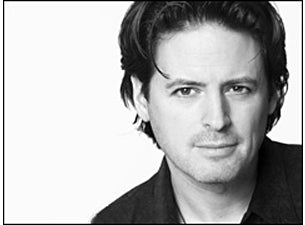
Image result for john fugelsang


I ran across John Fugelsang who gives a progressive Christian view of religion and Jesus.  I much prefer a comedian's take on issues than the more combative debate forms.

Who wouldn't want to vote for a guy who was a peaceful, radical, non-violent revolutionary; who hung around with lepers, hookers, and crooks; who never spoke English; was not an American citizen; anti-capitalism; totally anti-death penalty; anti-public prayer (Matthew 6:5); but never once anti-gay; didn't mention abortion; and was a long-haired, brown-skinned, homeless, middle-eastern, Jew?


Only in America can you be Pro-Death Penalty, Pro-War, Pro-Unmanned Drone Bombs, Pro-Nuclear Weapons, Pro-Guns, Pro-Torture, Pro-Land Mines, AND still call yourself 'Pro-Life.'

·         Loving the Second Amendment while opposing the NRA is every bit as natural as loving Jesus while opposing Westboro Baptist Church.

·    Jesus never called the poor 'lazy,' fought for tax cuts for the wealthiest Nazarenes or asked a leper for a copay.

·         People get God and religion confused. I think God is a bit too hip to join any of his unauthorized fan clubs.

·         My mother was an ex-nun, and my father was a Franciscan brother, so I grew up believing in Jesus the way anyone would believe in Mom's first husband.

·         Blaming Obama for Iraq violence is like blaming Daniel Craig because Octopussy sucked.

*     America doesn't have an abortion problem - it has an unwanted pregnancy problem, and an abortion symptom.


Saturday, May 23, 2015

Theology as Poetry: Part 2


Christian theology as poetry is a spiritual awakening not just to God but to oneself.  God through His spiritual DNA gives intuitive gifts that work with His Spirit that leads to spiritual contemplation.  The soul may have always had these latent gifts from the beginning or from a spiritual awakening, a poetic instinct comes alive through the mystical experience.  One sees heaven, creation, God, people, and Scripture in a new light.  What was once hidden is revealed or what was always there is now seen as if for the first time.

Like a blind man coming out of a cave only to see the world for the first time in all its splendid glory, light, colors, and beauty.  This is a poetry of experience and a poetry of knowledge all converging together into one harmonic song.  Secrets become revelations and the obscure still shrouded in mystery becomes personal and full of ecstasy.  Like a person who could never understand or really "see" art, so the mystical theologian still sees in part and knows in part, but in a deeper more personal way of knowing.  The objects and the world around did not change but the way one knows has been transformed.

There is no theological poetry without mystical experience and no mystical experience that stirs the poetic imagination.  The world becomes a sacrament of holy fire and human vision is changed by a vision whose source is the Spirit of the living God.  A kind of mystical death takes place where pride gives way to humility and self gives way to God's abiding presence.  One still seeks God but one is also possessed by God all at the same time in the eternal now.  Time itself has been transformed from chronological time to time that has no end.

This poetic knowledge is not just speculative or rational but experiential and incarnational at its core.  One does not leave this world for another world but becomes more firmly rooted into being an agent of change as God's kingdom collides with the powers and energies of this dark world.  The soul sleeps in the rest and presence of God as it is fully awake to all of creation.  Mystical death and life, crucifixion and resurrection, all join together as heaven and earth join as one in mystic marriage to the Messiah bridegroom.

Friday, May 22, 2015

Theology as Poetry


Words are signs signifying reality beyond the concrete of objects.  Objects are light bearers of eternity which are shadows and pointers of heavenly substance.  The words inspire, sing, and spark a multitude of images before one's mind.  The words of theology are poetry because they are not dead words but living words.  The Bible itself is a living word because it also is poetry in motion.  It does not stand still but keeps moving to the rhythms of the Spirit of God.

Poetic intuition is a gift from God and one is simply blind if they do not recognize the source where true inspiration and poetic rhyme and lyrics find their origin.  The true poet, the spirit-inspired poet speaks with a certain clarity even if they are full of mystery.  Raw emotion and passion fills the lips of the poet whose heart and life is surrendered in humility to God.

The poet is consumed by the Spirit that his hand writes automatically without much thought or action.  Where it begins and ends is like a dream to the poet who writes.  Where does this creative genius come from?  It comes from the creativity and life giving Spirit of Creator God.   Mystical contemplation on Scripture becomes theology at its best born from a life of prayer.  Mystic and poet all converge as one and they can not be separated or divided but make up the sum of the whole.

Theology as poetry is simply imitating God whose Spirit is the imitation of Christ.  Complexity gives way to simplicity as dividedness gives way to singularity.  Self is lost in the presence of God as mystical contemplation and knowledge flows like a great river from the throne room of heaven on earth.  Earthen vessels of humanity are creative channels for the river of God's Spirit to flow inward and outward.  Poetic music and songs spring to life by the life giving Spirit of God.

The earthly turns heavenly as the animal of man turns into the sons and daughters of the Most High God.  Poetry is not like math to be calculated but like art to be appreciated.  Poetry is not like logic to be analyzed but like a beautiful dance to inspire the imagination.  There are multiple meanings and layers to the poets words because not one single image or meaning can capture its full substance.

One can hardly discern where the human and divine meet or where they depart.  The whole mystical theology of Scripture shaping the imagination and overflowing the heart comes from the depths of the soul moved by the Spirit of God.  The poet's will is moved by the will of God and the poet writes thoughts, images, and symbols like a musical instrument being played in the hands of God.  This does not mean the poet does not know what's happening or does not play a part in the creative process.  What it simply means is God's grace and mystical presence speaks through the depths of his created being to the rest of God's creation.

Boundaries are indistinguishable as heaven and earth collide in this grand symphony orchestrated by the conductor of the Holy Spirit.  Suffering, mystery, and deep passion fill the words of poetry from the heart of God to man's heart.  What the mystic discovers in silence, is expressed in words by the poet.  Sometimes the violence of the Spirit is so intense that the poetic words come out screaming for a response.  Intelligence and feelings are so intermixed together that the poetry may seem like a divine secret, even to the one expressing them into words.  Mystical knowledge is like artistic revelation that comes from the deep recesses of man's spirit touched by God's Spirit and presence.
Saturday, August 27, 2011

Romans 8:28

I have been thinking about Romans 8:28 for some time now.  Last week or so, I did a search under meaning when I had a little time because I was particularly thinking of what Greek word for love is in that verse.  What I found as the first link was actually very interesting.  It is written from a Mennonite perspective.  Now, one of the areas of Christianity that I study is the Anabaptist and the Reformation.  When it comes to salvation and life, I am synergistic, or one who believes in the cooperation in our life between God and us to accomplish the work of our salvation.  Therefore, I am comfortable with the coexistence of our free will (although limited) and God's absolute sovereignty/control/origination of all things.  Unfortunately with the Wikipedia article linked, it begins with a what I consider an incomplete beginning by starting with the Reformation as in reality, the early church's position in my opinion, prior to Augustine, was synergistic.  So to me, the correct "organization" if you will of the Wikipedia article would be to begin with the oldest traditions and then move historically forward. 

Monday, May 9, 2011

Will the Theologians Please Sit Down


All the statistics look bad for the North American Church. Everything from church numbers are down to moral and spiritual decay is up. The American church has more money, resources, and theologians and yet things continue to go from bad to worse. The issues are complex and legion but few seem to question how theology is done in the church today. Professional academic scholars call the shots and yet the church is moving even faster in a downward spiral.

I remember many years ago reading Soren Kierkegaard who said in his day that metaphorically speaking, we need to "kill (all) the commentators." Why? Because they are killing the church! More recently, David Bercot has gotten in on the action, an Anabaptist who says we have shifted from Godly fruit to orthodox theology as the test of Christian faithfulness. Is this what Scripture describes? Have we not moved from Jesus words of "Follow me" to now what theologians and seminaries promote, "study me?"

Here is a sample quote for us to consider from David Bercot:

"The people whom the world looks up to as brilliant generally have been the ones who have had the hardest time grasping the simple truths that Jesus and his disciples taught."

(Will the Theologians Please Sit Down, p.48)