Showing posts with label Hell. Show all posts

Wednesday, October 17, 2018

What the Hell?


Image result for what the hell?


The word "hell" actually does not show up in the original Greek Septuagint Bible. It is an English translation from the Greek words, Hades, Tartaroo, and Genhena. If you want to see how bad our English translations are with the word 'Hell,' check out how many times it is used in different translations and then you will start to see the problem.

The message - 56 times

King James - 54 times

New King James - 32 times

New Living Translation  -  19 times

New International - 14 times

New American Standard - 13 times


Any Questions?


The Rich Man, Lazarus, and Jonah Stories


Image result for the rich man, lazarus, and jonah stories


"The chasm between "heaven" and "hell" in this story does not seem infinite. The rich man, though dead, is not beyond the reach of love. All he needs is for someone naked and alone to seek him out in hell---a loving emissary of the naked God, come to liberate him from his own internal prison."
- Doug Frank  (A Gentler God, p.302)

"Jesus once treated a crowd that had gathered around him to these cryptic words: "This generation is an evil generation; it asks for a sign, but no sign will be given except the sign of Jonah. For just as Jonah became a sign to the people of Ninevah, so the human son will be to this generation (Luke 11:29-30).

How does Jonah point to Jesus? Perhaps by spending three days in Sheol and then returning----a human son who goes to hell and back. When Jonah finally meets the Ninevites and warns them about God's judgment, he speaks with the conviction of one who has experienced that judgment----not as condemnation, but as salvation. He knows that hell's eternity is not literally eternal, and those who find themselves alone in their sufferings there are not literally alone.

It will be a cold day in hell before evangelical preachers use the story of Jonah to explain that "eternal" flames are not without end and that Jesus is present in hell. But large sectors of the Christian church have kept alive the strange idea that Jesus went to hell to put and end to its tortures."
- Doug Frank, pp.309-310).


Friday, July 27, 2018

The Sacred Heart of Jesus


Image result for the flames of jesus loving heart


To better understand the implications of Jesus statement, “Today the Scriptures are fulfilled,” we need to consider some of the diversity within the Scriptures and view them canonically from the perspective of all of Scripture. We have already looked at Matthew’s Gospel chapter 19 where Jesus says divorce is off limits except for the one exception clause he state in verse 9 of sexual unfaithfulness.

          Mark’s gospel on the other hand simply says divorce and remarriage are forbidden with no exceptions listed (10:1-11). If the Gospels were all that we had to go by, there would be only one ground for divorce listed. But later progressive revelation with new circumstances has Paul adding another exception and that was desertion (1 Cor.7:15). What about new circumstances so many fragile families find themselves in today like physical abuse, destructive addictions, ongoing mental abuse and sheer disrespect and belittling of their marital partner? Certainly new situations demands new listening to the voice of Jesus and what the Holy Spirit may be speaking to God’s community today.

          If Jesus is the last Adam to free and liberate all people into God’s kingdom, what are we to do with the Scriptures that speak of death, destruction, torment, and universal restoration (Rom.5:18; 11:32; 1 Cor.15:22; Phil.2:11). Certainly there is judgment and hell to come but no one knows exactly what that entails when it comes to the afterlife. There is a coming and certain judgment that Scriptures speaks about but there is also this universal restoration Jesus tells us about.

          Jesus speaks about “the year of the Lord’s favor” in Luke 4:19, this is a reference to the year of Jubilee where all slaves are to be set free. Notice that Jubilee was not about setting a few slaves or some slaves free, but all slaves were to be set free. Take a moment to let that one sink in! Luke 3:6 says ‘all flesh shall see the salvation of God.’ Jesus famous parables of the lost sheep, lost coin, and lost son is where all are restored back to God (Luke 15).

          Listen and see with new eyes what the gospel of John says about salvation in Jesus. John 6:37-40 says,


All that the Father gives me will come to me, and whoever comes to me I will never cast out. For I have come down from heaven, not to do my own will but the will of him who sent me. And this is the will of him who sent me, that I should lose nothing of all that he has given me, but raise it up on the last day.


What does the Father give Jesus? Everything! What is God’s will? All people would not perish but have everlasting life. I love the way 2 Peter 3:8-9 says it,


But do not overlook this one fact, beloved, that with the Lord one day is as a thousand years, and a thousand years as one day. The Lord is not slow to fulfill his promise as some count slowness, but is patient toward you, not wishing that any perish, but that all should reach repentance.


Jesus will lose nothing given him by God the Father and God will raise it all up on the last day. Can we even imagine or picture what this might even look like?

          If you still don’t know what all things given to Jesus is, look at John 17:2.  Jesus prays to his heavenly father and then he says these words, “since you have given him (Jesus) all authority over all flesh, to give eternal life to all whom you have given him.”

Are you starting to get a grander cosmic picture of what God is doing in reconciling the world (cosmos) through his Son?

          Can we imagine with Isaiah that God’s ways are higher than our ways and his thoughts are higher than our thoughts? When people stumble over the doctrine of hell seeming unfair, some who support this doctrine resort to this verse in Isaiah 55:8-9. But if people would read the broader context of Isaiah 55:6-7, it is not a picture of a vengeful punishing God but a God of abundant mercy who abundantly pardons people (v.7).

          A God of love does care about divine judgment. God is always putting things right and making all things new! If we actually read Jesus words more carefully, we might even see that heaven and hell for Jesus is not just about the afterlife but about present realities right here on planet earth. Jesus did not talk about outside sinners but inside religious leaders when it came to hell. In other words, Jesus was turning the Pharisees own critical judgments about the judgment of God back upon themselves. The sad truth is too many Christians have preached about hell more like some of the religious leaders of Jesus day and not like Jesus did.

          Well, what about the eternal language of judgment in Jesus’ parables? I’m always bewildered when people want to talk about the clearest examples of biblical teaching comes from parables which are highly figurative and often use hyperbole to make a point. Jesus wants his hearers to take the hell language seriously but not necessarily literally.

We get ourselves into all kinds of interpretive problems if we press various points in Jesus’ parables too literally. God in some of Jesus parables appears unjust and Matthew 25 about the sheep and the goats if pressed too far, one can say it also teaches a works righteousness doctrine which totally goes against the nature and teachings of the rest of Scripture. Jesus parables are more often about this life rather than what some people think about the after life. If we don’t start understanding how these stories work, we will end up straining at gnats while we swallow camels.

          Heath Bradley in his book Flames of Love says so provocatively,


Hell is not used by Jesus as a threat for outsiders, but as a challenge for insiders . . . Can we believe as Peter did in the restoration of all things (Acts 3:21). Or as Paul did in the reconciliation of all things (Col.1:20). And as John did in the renewal of all things (Rev.21:5) this does not hamper our motivation for evangelism but just the opposite . . . it inspires us to preach fearlessly, love limitlessly, and obey unconditionally (p.70, 140)


Robert Wild once said, “What a burst of new life would penetrate the human race if everyone believed God is love and that they were already safe in the arms of love.” One of the greatest theologians of the last century was a Catholic scholar whose name was Hans Von Balthasar. He was an incredibly compassionate person and had a remarkable intellect he used for God in his writings. If we are to really believe in grace, not cheap grace or hyper-grace but biblical free unearned grace, here is what Balthasar wrote:


If we think of Hell as a place of punishment, the logical contrast would seem to indicate that heaven is a place of reward. Yet, the Christian conception denies that heaven is fundamentally a reward for faithful service; it is rather, the free gracious gift of a loving God, unmerited by anything we have done


Why? Because Jesus has done it all! He has completed what he started and on the cross, he said, “It is finished.” He accomplished all that he sought out to do for his mission was complete. Some of my friends answer the question, ‘when were you saved?’, with the response, “I was saved two thousand years ago when Jesus died on the cross!” Even death is not the end, it’s only a new beginning!


Today The Scripture Is Fulfilled

Image result for today the scripture is fulfilled


“We have to start with Jesus and refigure our ideas around him, rather than trying to fit him into our existing worldviews.”
- N. T. Wright

“I knew Jesus before he was a Christian . . . And I liked him better then.”
- Rubel Shelly


How is it that Jesus is rejected in his own home town of Nazareth? Maybe the saying is true, “Over familiarity breeds contempt!” Jesus is assigned to read from the Prophet Isaiah scroll. He puts his finger on this place and begins to read:

The Spirit of the Lord is upon,
Because he has anointed me
to proclaim good news to the poor.

He has sent me to proclaim liberty to the captives
And recovering of sight to the blind,
to set at liberty those who are oppressed,
to proclaim the year of the Lord’s favor.

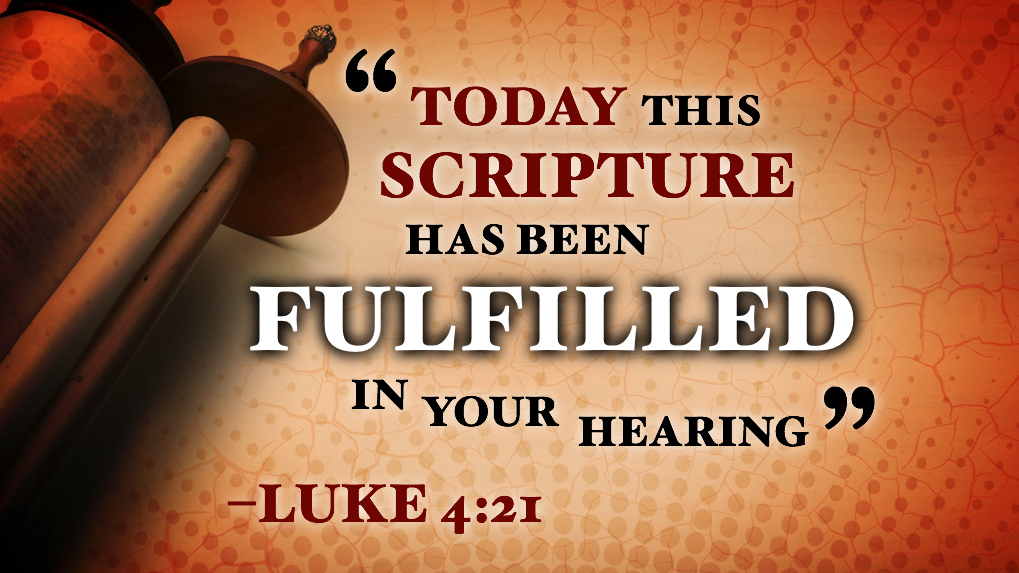
Jesus rolls up the scroll and in the synagogue with his fellow towns people, he says prophetically, “Today this Scripture has been fulfilled in your hearing.” Jesus reads from Isaiah 61:1-2 but breaks off the ending of the verse of God’s judgment and God’s vengeance. If someone were to read the Scriptures today and do this, people might yell, read the end of the verse! For God’s sake, read the end of the verse! The people were looking forward to the day when all of Israel’s enemies would be destroyed and they would go back to the glory days of how it was during the time of the reign of King David and King Solomon’s reign.

          What happens next is unbelievable. The people cry out for a sign because they heard stories of Jesus doing mighty miracles and works of God but they had not personally witnessed any themselves. I mean, ‘C’mon, isn’t this Joseph son who did day labor for other people in town? We know this kid, and he seems liked an average Joe in our community.’   

          So Jesus does the unexpected. The crowd in the Synagogue were somewhat admiring his reading of Scripture but Jesus begins to tell how God used Israel’s enemies in the past from other Older Testament Scriptures like Elijah went to the widow in the land of Sidon and the prophet Elisha only healed a leper who was from Syria. The crowd went from being impressed to being enraged. They actually tried to physically push Jesus off a cliff. Can you see the hometown newspaper the next day? “Riot breaks out and home boy falls off a cliff!”

          We neglect the Scriptures or read them to bring us some comfort or help us to fall asleep reading at night. Yet reading the Scriptures can be quite dangerous and get you killed in certain places. God’s message to Israel was good news for the whole world. The problem was Israel just saw it as good new for themselves while it was bad news for everybody else. What many Jews believed was salvation was their exclusive right and they were willing to fight and do violence over that belief.    

          Can we come to the point to understand what Jesus is driving at over and over when it comes to what some people call the doctrine of election? Wars and divisions have been fought over the meaning of this little word. Election gives us no claims on God and certainly not a privileged status over other people. God’s incredible love is for the whole world and all people of every nation.

          When Jesus comes on the scene, Israel had failed throughout most of biblical history to live out their covenant faithfulness to God. We read over and over of their failures and their extended exiles. When all of Jesus disciples abandoned him and he was left standing alone, it was because Jesus represented the sole elect one for all of humanity. Where all others failed, he remained true to his calling and identity for God. If election means anything, it more means a vocation of suffering and greater responsibility in living for others. We are all elected corporately into Christ who was the faithful elect one of God.

          What Israel had a hard time understanding about Jesus was not only his willingness to hang out with all the wrong people but salvation and God’s kingdom were both universal and cosmic in scope. Jesus continually reversed everything where people who thought they were in God’s kingdom are out and those who thought they were out were actually in (Matt.25). No one for Jesus was beyond God’s redeeming love and the last will find oneself first and the first will find oneself last (Matt. 20:16).


Wednesday, July 19, 2017

Can We Rescue the Dead?


The modern western church typically sees a great divide between those who are still alive on earth and those who are dead and have passed on to the after life. What is fascinating is to learn how the earliest Christians not only prayed to the dead and asked for assistance in their prayers but they even prayed for the salvation of those who died without Christ.

There is a list of early evidences from archaeology, grave sites, epitaphs, and early church writings to at least take another look at what these early Christians believed and practiced. Some of the early Christian writings that point in this direction are Luke 16:19-31 nd 2 Clement 8, The Shepherd of Hermes, the Apocalypse of Peter, and the odes of Solomon written during the second century.

Particular interest is Thelca's prayer for Falconilla and Perpetua's prayer for Dinocrates. There is the harrowing of Hell by the ancient Eastern Orthodox of Jesus descent into hell and emptying it and several early church fathers views of universal salvation from Origen and Gregory of Nyssa to later Christians in the early church.  Two teachings that have been lost in the modern church today is (1) Christians still spiritually grow and evolve in the after life; and (2) people can still choose God even after they have died.


Wednesday, July 6, 2016

Putting Hell in its Place


Zondervan published a second edition of their four views of hell book and added universalism for evangelicals to consider.  Denny Burk holds the eternal conscious torment view, John Stackhouse the terminal punishment view, Robin Perry a universalist view, and Jerry Walls a hell and purgatory view.  Robin Perry's new voice to the conversation is unique because he raises a host of issues like the Bible supports various texts on everlasting punishment, annihilation, and universal restoration.  How one deals with this diversity and the divergent imagery of hell in Scripture will tell where people end up in their conclusions.

Perry tries to do justice to the full scope of the biblical witness which means he acknowledges both hell as conscious and punishment and as purification and restorative.  He understands the destruction imagery as part of God's purging process and not just as punishment.  One could say for Perry that there are three main views, the tormenters (traditional), the terminators (annihilationists) and transformers (universalists).  Where Perry tries to harmonize the biblical witness, it seems many others either proof-text, or silence or ignore various texts.   One may disagree with Perry conclusions but he does a wonderful job showing the depth and richness of Scripture.

The only way to reconcile divine love with divine victory is universalism for Perry.  One wonders if this has to be a dogmatic conclusion or deductive logic from scripture or maybe simply a blessed hope for the future since Perry freely acknowledges that Scripture does not directly teach full blown universalism.  "So if universalism is not true, it seems to me that the pressure is on to surrender either the claim that God is love or the claim that God completely wins" (p.90, Four Views on Hell).


Saturday, May 7, 2016

John Crowder


John Crowder wants the church to be more loving, more follow a theology of the cross and certainly be more mystical.  We are called to strip away our false self which strives to live independently from God and develop a righteousness consciousness, not a sin consciousness.  Our faith does not create reality, it simply trusts in the reality of Christ.   Can the church develop a deeper and richer theology immersed in history towards a greater mystical union with God?

When it comes to the doctrine of hell, Crowder wants Christians to embrace both judgments biblical texts as well as universalistic ones.  Yes, hell is real but eh scope of Christ's redemptive work is both universal and cosmic.  In Eastern Orthodox theology, heaven and hell are two sides of what it like to be in the presence of God. 

God's love is pleasure for the lover of God and is torture to the hater of God.  God's love and wrath are simply the extension of an all-loving purifying being.  In the Exodus story when Moses was on Mount Sinai, the Israelites experienced a terrible fire but to Moses, he experienced the glory cloud of God.  Metropolitan Hierotheos Vlachose in Life After Death says, "God himself is paradise for the saints and God himself is hell for the sinners" (Crowder, p.133).

Crowder has a hope for the salvation for all men, but not a dogma or doctrine of universalism.  For Crowder, the Bible is more mysterious, open-ended, fluid, and paradoxical than those who want thinks all worked out in a nice tidy system.  Rather than calling people "lost" or "unsaved," can we call them not fully Christian yet.  Rather working from boundaries of exclusion and inclusion, as if we know who is in and who is out, can we leave this to the mystery of God's will and love?  Crowder says he is not a universalist but he is a hopeful one. 

Certainly Christians would be viewed differently is they looked at hell as more about purification than punishment.  How would Christians be viewed if they looked at themselves as a work in progress rather than arrived or as people on the way rather than looking down on others who have not progressed as far in their own walk and faith in God. 

Can a deeper theology of the cross flatten all pretensions and prejudices to where the ground is level for all people no matter what dark place they may be in at the moment?  Can Gods ultimate justice then be viewed through the lens of redemptive justice rather than retributive justice that so often condones violence and even torture at times?  Could we just agree a theology of weakness joins humanity together and not simply being in the right religion or the right location? (born in America rather than some other country).


Friday, April 3, 2015

Spiritual Discernment and the Enlargement of the Heart


"Sin is simply a turning away from Divine love"  -  St. Silouan

Spiritual discernment is entering into the rhythms of God's creation where one begins to see the interconnectedness of life.  It is spiritual awareness and spiritual listening.  It is quiet contemplation and the practice of simply slowing down and being still.  Several spiritual disciplines that is like medicine to our soul is lection divina (spiritual reading), visio divina (spiritual gazing) an audio divina (spiritual listening). The whole purpose of spiritual discernment is to see the love of God in everything.

In the midst of my inner turmoil and pain of feeling a deep sense of abandonment and God purging and cleansing my soul, I felt strongly led to buy the book The Enlargement of the Heart by Archimandrite Zacharias which is about the life and teachings of Saint Silouan the Athonite.  I also have been taking communion with others almost every day and have a new wonderful spiritual director who happens to be an Eastern Orthodox priest.  What has been both scary and exhilarating is this spiritual purging process that St. Silouan calls, "Keep Your Mind In Hell and Despair Not."  It's like I have been in hell with God all at the same time which to say the least has been a very strange and unsettling experience.

What Silouan's wonderful teachings is confirming in me how God is removing my distractions, my worldly attachments, and my pride which keeps getting in the way of everything.  Things that usually bother me are not disturbing me and I am starting to have a strange peace about everything.  My mind can not catch up to my experience of what is going on but I believe my heart is being enlarged by the heart of God.  I am going deeper into repentance and humility and I am losing more of myself to God.  One would think this all sounds wonderful and great but far from it.  I have felt so unbalanced, uncomfortable, and the inner battles of my mind have been so intense.  Death of self and confidence in God do not come easily.  Everything that is worthwhile is costly and must be fought for inch by inch.  For St. Silouan, it's all about the Holy Spirit leading us into the perfection of God.

Sunday, February 8, 2015

Heaven and Hell on Earth and what About the Afterlife?


"We look to a new heavens and new earth in which righteousness dwells" (1 Peter 3:13)

People tend to either know nothing about life here and now much less life or non-life after death or people act like they know whose in with God, whose out, as if there will no so surprises in the afterlife.  I believe we need a lot more honesty and humility when it comes to speaking about this life and the life to come.

In the Bible, God's fire stood before Israel and Pharaoh's army.  To God's people the fire of God was warmth, light, protection, and comfort.  To Pharaoh's army the fire was confusion, darkness and terror.  For Daniel's friends thrown in the fiery furnace, the fire did not touch them and the presence of God was with them.  The ropes that bound them were burned off but they were not burned by the fire.  But for Daniel friends captors, they were incinerated by the fire.  When we think of heaven and hell whether we experience that in this life or think about it in regards to the afterlife,  God's love gives light and delight to those who love God and it is darkness and torment to those who do not love God.

There are multi-dimensions to reality where the veil between heaven and earth may be more thin that people realize for those who have spiritual eyes to see.  Christians today get worried about apocalyptic images of the end of days and people who might end up in hell but fail to also heed the prophets and Jesus warnings against the self-destructive idolatry that takes place in the here and now.  We think of Hell as merely retributive but fail to see it as corrective because God loves all His children, even his wayward ones.

Can we read the Bible with new eyes to see what it truly says about our own souls.  The story of the rich man and Lazarus is a familiar one to some in Luke 16:19-31 but I am afraid we miss some of the deeper dimensions of the story while we focus on the wrong details of the story as if the story is about how the torment in hell works or what the final outcome looks like in the end.  Both are left more to our own imaginations rather than listening to Jesus main point concerning turning away from our idolatry and a strong hint at resurrection.

What this biblical story shows is what Jesus does in many of his teachings, it shows reversals in God's kingdom.  The rich man is rich in this world but poor in being rich toward God'  Poor Lazarus seemed like he is abandoned in life whereas in reality God is the one who holds his life together, for better or for worse.  The rich man fights God's process of the purifying fire and still does not have love or compassion for Lazarus much less sees his own self-centered delusions about himself.  Dare we look into the abyss at the condition of our own souls?  What will we find there?

We think we know the last word but do we?  This story of Jesus is not before the final end?  Who knows how far God's love will go or what will finally happen in the end, only God knows.  Just like the young rich ruler who walks away from Jesus sad because he could not become one of Jesus disciples because of his great wealth, is that the end of the story?  Church tradition and history tells us this man finally gave it all up and became a follower of Jesus.  The truth is until God brings the end about, we really don't know how the story will end since most of us are still in the middle of the story.  What we choose now has significant impact so choose wisely.

In the end, if the only reason your a Christian is to avoid hell, have you really encountered the risen Christ yet?  We follow Jesus because Jesus loves us and we love Him.  Our hope for the future is not because of anything we have done but because of everything Jesus has done on our behalf.  One of the things we don't know for sure is if people end up in hell or even annihilated or destroyed in some way, doesn't this allow evil in some sense to have the last word?  Is not the annihilation and destruction of God's good creation precisely the aim and goal of evil?  Is not the self-destruction of people made in God's image a victory for evil?  Maybe in some mysterious way love has the last word in these cases but should not the love of God still hold out hope even if by all appearances there seems to be no hope?

If Jesus taught us to love our enemies, then should we still not hold out love for those who are God's enemies?  I believe we misunderstand some scripture that is more about the coming judgment on Israel, Jerusalem and its temple rather than an eternal cosmic judgment for all time and for all eternity.  And even if some people resist God's love for all eternity, should not people filled with God's love pray for mercy and have a blessed hope for them because the heart of God is that none should perish but all have eternal life (2 Peter 3:9).

Thursday, September 15, 2011

Who Goes to Hell?


"THERE ARE THREE PLACES WHERE RACIAL DIVISION STILL PERSISTS: BARS, PRISONS, AND THE AMERICAN EVANGELICAL CHURCH" - Francis Chan

The church has often focused on the unchurched as those who are going to hell. What is refreshing of Chan and Pringle's book "Erasing Hell" is the self-critique style and looking at oneself first before they consider looking at others.

They list several ways from Jesus words on why we should take a hard look in the mirror:

1. Our words can condemn us. When we call people fools and condemn others, we are not showing God's kingdom but are actually unwittingly participating in hellish ways. We either speak words of life or death. We speak words of hell that demean others or heaven which esteems others.

2. When we don't help the poor may be an indicator that we are on the road to hell. Chan and Pringle write, "Yet many hellfire preachers are overfed and overpaid, living in luxury while doing nothing for the majority of Christians who live on less than two dollars a day (p.121).

3. Jesus did not warn drunks, thieves, or adulterers about going to hell but he did warn teachers who taught God's word. Teachers of God's Word should take the teachings of hell most seriously since it particularly pertains to them.

4. The lukewarm are in danger of hell. People who confess Jesus with their lips but deny him by their actions that the Bible gives it's strongest warnings to.

As I have been reading the fifth chapter of Chan's and Pringle's book, they sum it up by saying, "Racism, greed, misplaced assurance, false teaching, misuse of wealth, and degrading words to others are the things that damn people" (p.124).

They end with these strong words, "I want to shock my enemies with Christian love."

Now that's a shock that more people could use!

Wednesday, September 7, 2011

We See As We Are


WE HAVE A TENDENCY TO RECREATE JESUS IN OUR OWN IMAGE - Francis Chan

We are quick to point out the many cultural distortions that lead to idolatry. Every kind of ism from nationalism, sexism, racism, militarism, and consumerism. But what about the many ways we make Jesus into our own image? We do like the first chapter of Romans says and turn the Creator into the creation or we return the favor at the beginning of the Bible and "make God into our own image."

Francis Chan and Preston Sprinkle deal with the problem of finding in the Bible what we want to find in the Bible. If we want to find hell in the Bible then it is there. If we don't want to find it then it is not there (at least the dark grueling apocalyptic imagery that scares the hell out of us if we believe in hell at all).

I remember many years ago when the owner of a Christian bookstore told me that Jesus was a Republican. She said unashamedly, "Doesn't everyone know that Jesus was a Republican!" This tells me more about the person making such comments than it actually does about Jesus. We like to think Jesus is just like us, all the way down to the flag we raise to our voting preferences.

Chapter two of Chan's and Sprinkle's book is provocatively called, "Has Hell Changed? Or have we?

Good question . . . .

Tuesday, August 30, 2011

Whose Will? Which God?


PERVASIVE INTERPRETIVE PLURALISM IS THE PROVERBIAL MASSIVE ELEPHANT IN THE ROOM OF EVANGELICAL BIBLICISM THAT NOBODY TALKS ABOUT

- Christian Smith


I am currently reading Christian Smith's "The Bible made Impossible" which is about why biblicism is not truly the best way for Christians to read the Bible. Biblicism is to be the knock down answer to all questions and problems we face in life. Whatever the issue or problem, the Bible has the answer. Biblicism often is guilty of prooftexting the Bible because of its own latent dogmatism. Christian Smith's thesis is simple. If biblicism is true, why are there so many diverse and plural interpretations of the Bible? Smith is unswerving to let the reader know and beware that no matter how one tries to duck or get by this issue, the problem still persists nevertheless.

This brings me back to Francis Chan and Preston Springle book. An interesting illustration to apply to discipleship and life questions is following God's will. Chan and Springle make a remarkable illustration of how Samson broke God's "moral will" by loving a pagan woman but followed God's "decreed will" which prompted Samson to fight against the Philistines (see Judges 14:4). But doesn't this sound like we are pitting God's moral will against His decreed will? And where does one find these kind of distinctions and divisions within Scripture itself?

Although I find Chan's and Springle's observation here intriguing, I can't help but wonder if foreign categories and a some kind of systematic theology is leading the interpretation of Scripture rather than Scripture leading our systematic theology. And how does this bear out in life? God's decreed will trumps His moral will at times? It seems like there are a whole lot of baggage being brought into this discussion that actually isn't from Scripture itself. So coming back to Smith's interpretative pluralism, doesn't this become just one more interpretation among many others of the same biblical text? Biblicism always sounds good but it does appear when the rubber hits the road, the problems are legion.

Erasing Hell


GOD HAS A RIGHT TO DO WHATEVER HE PLEASES . . . WE NEED TO ASK GOD TO HELP US THINK RIGHTLY ABOUT HELL - Francis Chan

There are so many response books coming out on Rob Bell's book "Love Wins." Obviously Bell's book hit a nerve within the Christian community. One of the more popular books I am currently reading is Francis Chan and Preston Sprinkle's "Erasing Hell." I for one after reading Bell's book would like to say that Rob Bell did not erase hell, but he did soften it and possibly tried to empty it of its finality. Does hell matter? Chan and Sprinkle certainly think so and say it does matter. One may wonder if this doctrine actually effects a person's personal salvation or not but how we practice our faith in regards to others around us may very well impact their salvation!

Where Bell's book convicted me the most is the hypocrisy of the traditional viewpoint that doesn't seem to stir people to witness to other people about their faith in Christ anymore than it does people who profess faith in Christ and do not believe in hell. Bell's book is a 'wake up" call for anyone who wants to think deeply about these issues rather than simply ignoring them or not thinking about them at all.

There is a profound humility and honesty in Chan's and Sprinkle's book which is refreshing. They may deal with history and biblical exposition on contested biblical passages better than Bell but there still seems to be a popularized version of Evangelical interpretation of history that I for one find problematic.

For example, Origen's universalism is so different than later eighteenth century enlightenment thinkers that it is really not fair to link them together in some way. Origen is an early Christian martyr and early church father. Again, I find it troubling to link the condemnation of later Origenists (who miscontrued Origen's teachings) to somehow to Origen himself (which the early council did but the long history itself actually tells a different story). One of the ways to learn from Origen in being a disciple of Jesus is how intellectually credible Origen made his Christian views to the people of his day and even how he was willing to be torutured and killed for his Christian faith. How many Christians are willing to risk all for the gospel of Jesus Christ? If Origen is a universalist, I wish there were more like him! Where are those Christians who take a more tradititional take on hell when it comes to sharing one's faith and laying one life down for others?

I would love to hear a conversation between Rob Bell and Francis Chan because I cannot help but wonder if they are not talking past each other on some of these very important issues.


Tuesday, July 5, 2011

Rob Bell Again:


I was on vacation and there was a Sunday School class which was dealing with Rob Bell's book "Love Wins." The teacher's approach was to give a few quick sound bytes of Bell's most controversial statements. Nothing positive was given about the book but simply Bell's book was used as a kind of foil of what's wrong with Christian theology today. The church was in the same state as Bell's and some people in the class had even attended Bell's church. Several people alluded to Bell as a false teacher who will experience the reality of hell someday. Others felt sad for Bell for going so far off the beaten Evangelical track and yet none of them said they had even read Bell's book nor could the teacher really say adequately what Bell really believed? Is Bell a universalist? Does Rob Bell believe in Hell? And what about all the scriptures Bell did not quote in his book that were against his view?

Here are my quick responses to these questions about Rob Bell. Bell says he's not a universalist so can we believe what Bell actually says about himself? I would hope Christian charity would give Bell the benefit of the doubt or we end up putting beliefs on others which they categorically deny. Does Bell believe in Hell? Yes he does! Although I also disagree with some of Bell's use of Scripture, I typically have problems giving critical book reviews where people are rebuked not for what they say but for what they do not say. Can we simply stick to what people say?

Rob Bell's book actually challenges me in my own hypocrisies and apathy towards those we perceive as people who do not know God or have separated themselves from God's love. So when it comes to discipleship ethics, I hope Christians will do a lot less stone casting and show a lot more charity towards those with whom they disagree. If orthodox Christians are not careful, they may end up siding with hell against those whom they think are too soft on hell. Just a thought!

Wednesday, June 15, 2011

The Church On the Way to God or the Church in God's Way?


LORD, SAVE US FROM YOUR FOLLOWERS - A bumper Sticker

Rubel Shelly provocative book "I knew Jesus Before He was a Christian . . . And I liked him Better Then" captures the feelings of many within the church, the unchurched, and the de-churched. So many Christians today want to cop out and say, "Don't look at me, look to Jesus." But the Apostle Paul said, "Follow Me as I follow Christ." We are either imitators of God or we are not!

I was at a restraunt today and my son said, "Look at that man's shirt Dad." His shirt said, "Christ or Hell." My son asked me as a young Christian what's up with that? Well, I told him there is a difference between being a witness for Christ and advertising for Christ. Secondly I told him one way to take it is the man was saying he was a Christian and others were going to Hell. But the main thing I told my son was Jesus never told sinners they were going to Hell. He told that to religious leaders!. Somehow we have turned Christ into the great condemner of the world rather than the great Savior of the world. Something to think about!

Tuesday, May 31, 2011

Razing or Resurrecting Hell?


There are a growing number of Christian writers who want a gentler, kinder Hell but can not escape or get totally away from it. Whether that be Sharon Baker's book "Razing Hell" or Rob Bell's "Love Wins," the tension of God's retributive and restorative justice and character of love and holiness are so interwoven together that these Jesus followers try to creatively or imaginatively deal with them despite the fall out from those on the right or the left.

Bell provocatiely says things like those most concerned about others going to hell seem less concerned about them going through hell on earth now. And then there are always those who are concerned for others going through earthly hells but don't seem concerned at all about the possibility of hell after death.

The context of Jesus fiery hell sermons were aimed directly at the religious establishment, not the irreligous pagan and non-believer. Something the church needs to rehear and look in the mirror first before they look out the windows at others.

But where I think Bell shines the most is on his discussion of the story of the rich man and Lazerus. Bell keeps Jesus audience so in mind (something that most ministers forget to do) that he sees Jesus point about not listening to someone who has raised from the dead as a powerful reminder of what his audience was missing in Jesus own upcoming death and resurrection. That the whole gospel message is about life over death, losing one's life to find it, and living out the kindom today so that one may experience its riches in the future.

Bell says Jesus is brilliant in the way he tells the message. Bell is also brilliant by showing in a powerful way what is often in the text but missed anyway. So maybe the issue is not to raze hell but to resurrect it in such a way that today's listeners can truly see the many ways hell comes to us in the eternal now and the eternal future. Something to think about . . .

Friday, May 27, 2011

Confessions of a Hypocrite


I have been reading Rob Bell's "Love Wins" and my response has been kind of a love/hate relationship. Rob Bell says some wonderful things that many Christians should affirm and there are a few things he says in regards about Hell and Salvation that will probably make them mad as well.

Bell asks a lot of challenging questions and at the end of the day, I have come to the conclusion that Rob Bell is simply stating what most of us live as followers of Jesus. So here is my rant which is trying to pull the logs out of my own eyes as I see splinters in Rob Bell's.

1. Many Christians believe in the traditional doctrine of Hell as a place of eternal punishment but they live like it really does not exist nor do they want to talk about it.

2. Which is worse, people who say they don't believe in Hell but love Jesus anyway or people who say they believe in Hell but never lift a finger to help others avoid that destination?

3. We have gone from Hell-fire Brimestone preaching to the gospel of God loves us. The gospel many of us preach every week is often more about us than God. Man has become the center in our practices even if that is not the case in our theology.

4. Every funeral most ministers preach at extends the hope of heaven. Why would people think we are not universalists because of our practices?

5. If it is all about love, why are we shocked by the lack of holiness whether that be new converts to how Christians live their lives?

6. If we can baptize and accept members into churches irregardless of people lifestyle choices, why do we try to correct people in the church later when we don't bother at the start?

7. Don't we practice a kind of once baptized, always baptized or once you said the sinners prayer, that is all that really matters when it comes to following Jesus?

Bell is simply saying out loud what many people have thought for a long time. If the basic gospel is all about 'God's love for us,' then why not love wins in the end? If it really is about US, why shouldn't God meet us on our terms?

If issues like homosexuality, divorice and remarriage is really about what is marriage, then possibly the main issues of heaven, hell and the fate of every person has to do with the question, "What is the Gospel?" Until we resolve this issue, I think many people are simply going to be talking past each other with all of our eye planks firmly intact.

Friday, May 20, 2011

"Hell No, We Won't Go!"


WHEN HELL BECAME AN IDEA INSTEAD OF A PLACE, IT LOST MUCH OF ITS HOLD ON FOLKS - Hugh Hewitt

I am just about to read Rob Bell's chapter on Hell but before I do, I thought I would share a few thoughts on the topic. Hell has become an embarrassment to the church. Preachers don't like preaching on it and church folks even view the word now as a swear word to be avoided and not talked about. If heaven is the most loved doctrine of the church, certaily hell is the least liked one of them all. But if Christians and other followers of Jesus are really honest. the doctrine of hell is not just offensive to people (within and without the church) but so is the doctrine of grace. It just doesn't seem fair goes the argument or it goes against our modern senses to think bad people can get into heaven in the end and people who are really good but reject Jesus don't get in at all.

At the end of the day, nobody believes they deserve hell. That alone should tell us something! We think we are fine or at least as good as everyone else around us. If there is a hell, its probably not that bad of a place any way. But it was Augustine who once said, "Anyone who thinks that such damnation is excessive or unjust clearly does not know how to measure how great was the wickedness in sinning where it was so easy not to sin." I might add, not only do we minimalize the consequences of our sin but we minimalize the greatness and awesomeness of God.

Maybe we don't really want to think about hell and all that damnation stuff. But if we really think about it, the more we may realize that everyone wants to be saved from hell, but not everyone wants to be saved from his or her sins.

When people were protesting the war and the draft, there were signs like "Hell no, we won't go." Maybe some of the protest against hell is also about people who simply don't want to sign up or be drafted in the Lord's army? Even the church needs to be reminded what C. S. Lewis once said, "Christianity is the story of how the rightful king has landed . . . in disguise, and is calling us all to take part in a great campaign of sabotage."

Wednesday, May 18, 2011

Love Wins


Rob Bell's new book is causing quite the controversy. His book asks hard questions that make many people in the church squirm to being out right angry. On the issue of universal salvation or universalism, Rob Bell says he does not believe in universalism even though some are trying to stick the label on him. Bell may hope that all may be saved in the end, but he really does not know for sure. He raises the question and Rob Bell likes asking uncomfortable questions.

I am currently reading Bell's book and it seems like Bell is asking a lot of the right questions even if some of his answers miss the mark or are wrong. Christians may not always like how he uses scripture or represents a differing opinion, but Bell is a master writer who wants the church to have a new conversation on issues of Hell and Salvation. Isn't it time for the church to reexamine some issues and have some new conversations? The standard conversations of how this usually happens has run quite thin for many people. Maybe part of the the great exit people see happening in the church today is how we handle controversy in the church?. When people ask hard questions or raise their doubts and even unbelief, are they received in love or silenced by scorn?

Rob Bell is certainly right about one thing, love wins in the end. If we can not even have a friendly debate or an honest loving discussion among Christians, how are we to with the world? If we can not speak to one another in love, then should we speak at all?