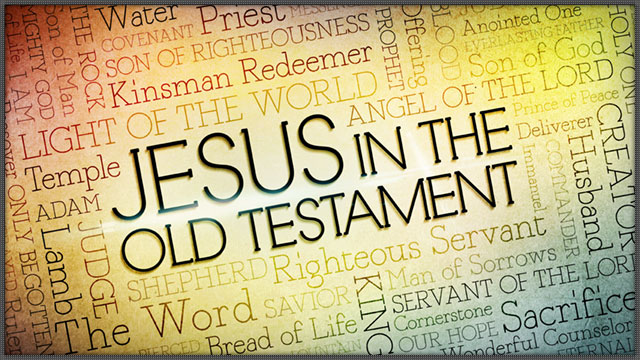
We have seen in a multiple ways how Jesus is the key to unlocking the deeper meaning of Scripture. We looked at many Scriptures of the Old Testament and how Jesus interpreted them. There were many examples given of how Jesus appropriated Scripture in the situation of his day as well as how people today misappropriate the Scriptures, especially understanding the deeper spiritual connections like a wheel, that all converge on Jesus.
As we examined many Scriptures and how Jesus read them, there are several features we should consider as we strive to emulate him.
1. To read the Old Testament
like Jesus is to read it with incarnational eyes. The whole Bible is God accommodating
himself to people where they live and how they speak. The Bible speaks of God
with human form and emotions because this is the only way we can even identify
with God who is both holy other and also holy present with us.
God came to his people in many forms
and in many ways. He spoke in the Older Testament through angels and his
presence went with his people with an ark, a tent, and a temple. Finally God
comes as the promised Messiah as a man. He is the living Word who came and
lived among us. I love the way Brad Jersak says this, “The Word of God is
infallible, inerrant and totally inspired. And when he was about 18, He grew a
beard.”[1]
Jesus told his disciples it was better
for their sake that he go because by his going he would send the ‘Paraclete’
(the Holy Spirit) who would make a multitude of little-Christs be present with
his power around the whole earth (Jn.14:15-17). The whole world filled with the
glory of Christ in the many nameless faces of people filled with the Spirit of
God like they were filled with fire from heaven in the book of Acts (see Acts
chapter 2, 4:29-31; 7:54-56; chapter 9 and so forth).
The whole Christian life is
incarnational where Jesus’ presence and power is demonstrated in the lives of
God’s people. As God incarnated Himself in Jesus the Messiah which Christians
celebrate and especially remember as “Christmas,” so people who take on the
name of Christ or Christian are to be temples of the living God demonstrating
the love of God before a watching world. The Holy Spirit teaches and guides
God’s people in every nation to follow Christ and him crucified by his
resurrection power of life, even over death.
2. To read the Old Testament
like Jesus is to read it with Jewish eyes. The whole Bible is rooted in Jewish soil. Every writer of sacred
Scripture read the Scriptures with Jewish eyes because their faith was grown
and shaped from their Jewish heritage. Unless we begin to read the Bible with
more awareness of a Jewish perspective, we will miss important parts of the
Bible’s story and what it is trying to teach us.
The Old Testament was not for the
Jewish people and the Newer Testament for Christians. The Old Testament was not
for Jews and the Newer Testament for Gentiles. Both testaments testify to the
one same God that is fully embodied and seen in Jesus. The Old covenant does
not save the Jews and the Newer Testament saves Gentiles. God made one world
with one gospel to save all nations and people by one Savior. Where humanity
tends to fragment and divide, God comes to unite and make us one.
There is one body and one Spirit---just as you were called to the one
hope that belongs to your call---one Lord, one faith, one baptism, one God and
Father of all, who is over all and through all and in all (Ephesians 4:4-6)
There
is one body of Jews and Gentiles together that make up the one true Israel Israel
A Jewish perspective is very real,
earthy, and this worldly oriented. We need to leave the false dualistic ways of
reading the Bible in Greek ways and return to reading the ancient texts like
its original Hebrew hearers. Maybe then we will begin to see with new eyes that
heaven and earth are closer together than we think and all of life is
relational and not split up or compartmentalized into separate areas. Even the
curse of death can be a blessing that takes us into different dimensions of
reality that we simply have been too afraid to venture in before.
3. To read the Old Testament
like Jesus is to read it with Ancient-Near-Eastern eyes. The ancient eastern cultural context of
biblical times is vastly different from our modern scientific western world
where North Americans reside and live in. There are so many ANE parallels to
religions and cultures surrounding Israel
One of our problems today is we read
the Bible with western eyes and not eastern eyes. We think like Greeks and not
like Hebrews. Can we try to understand the Scriptures from a middle-eastern
perspective rather than simply a North American one? Can we talk to
middle-eastern Christians or even Eastern Orthodox people who have absorbed and
drunk deeply from both wells of their Jewish history as well as the early
church fathers? There are so many new perspectives to learn from people who
have been immersed in eastern culture that can teach western Christians some
insights they would never see on their own without their help.
4. To read the Old Testament like Jesus is to
read it with Rabbinic eyes. Jesus
interpreted the Bible using ancient eastern rabbinic ways of studying the
Scriptures. If we don’t know what Pesher or Midrash or allegory looks like or
how it functions in interpreting ancient texts, we again will miss some of the
deeper and impactful meaning the Scriptures are conveying to contemporary
readers. There is a fluidity and beautiful scriptural tapestry of inter-textuality,
competing scriptural traditions, and setting forth God’s Word in new situations
that demand new interpretations and new meanings to be heard.
Learning the Talmud whose history developed
around the same time as the canon of the Newer Testament will give many
insights into the interpretive tradition of Rabbinic Judaism as well as
parallels between ancient Judaism and the Newer Testament and make connections
never before discovered. There are even Jewish mystical teachings which may
connect with insights from the later Christian mystical tradition. The vastness
and depths of mining precious treasures from God’s Word is deeper and far greater
than one can ever imagine.
5. To read the Old Testament like Jesus is read
it with western and eastern eyes from a global perspective. Jesus read the Bible not just from a
Jewish perspective but a global perspective. His vision was one that contained
the whole world in the secret that is open for all people every where for those
who could hear and believe. Christianity is exploding and growing faster than
ever in the global south and it time for western and European Christians to
begin listening to where the Spirit of God is blowing the hardest. Nobody has a
corner on Jesus and the wind of the Spirit blows wherever it may want to go
(Jn.3:8).
East and West, North and South all can
come together, all united by one faith and one Lord, Jesus Christ the Messiah
who was God’s missionary to the earth. If God had only one son and he was a
missionary, this says something profound to all those who claim his Son’s name
and believe they are his disciples and followers. God’s love and mercy and Son
are for the person who lives across the ocean as it is to the one living in our
neighborhood or alleys.
If Jesus was homeless, what does this say to the many refugees and
homeless people who live in our own country? Jesus was God in the flesh and
therefore all of life is sacred and holy to God no matter what status or place
one finds oneself in society. God is not a respecter of persons and neither should
we be (Rom.2:11; James 2:1-9).
6. To read the Old Testament
like Jesus is to read it with spiritual eyes. The whole Bible points us to Jesus and
without his Spirit indwelling inside each of us, we will be left to our own
devices in faithfully interpreting God’s Word. It’s the Spirit of God that
helps us discern what is spiritual and what is fleshly in the scriptures (1
Cor.12:10-16). It’s the Spirit of God that helps us know God as Abba Father
(Rom.8:15). It is the Spirit of God that helps us discover our true identity in
Christ (1 Cor.6:17; Gal.3:20, 27; 1 Jn.3:2).
Not only are we to read the Bible with
Jewish eyes but if we are to read it spiritually, I suggest we make ourselves
very familiar with the Patristic early church fathers. There is a wealth of
material to mine from those who lived their lives the closest to Jesus as well
as contextualizing the scriptures into their own times and situations. Please
don’t just read their conclusions and doctrines, read their biographies. Get to
know the mind, the heart and the spiritual disciplines and spiritual encounters
they had with the Living Lord that shaped their lives and thoughts.
7. To read the Old Testament like Jesus is to
read it with Jesus eyes. To
read the Scriptures with Jesus eyes is to read it humbly, carefully, and with
Jesus’ Spirit instinctively leading us a certain direction and taking us on a
specific journey. To read the Scriptures with Jesus eyes is to cultivate such a
deep faith and love for God that Jesus alone is our greatest focus and concern.
To see Jesus is to see the Father and to see the father is to see Jesus
(Jn.14:6-11).
I pray this study of seeing how Jesus
reads the Old Testament stretches your faith in a liberating and freeing way. My
hope is that each of us would grow more and more into the image of God’s son
that the whole world would come to see our love and unity for one another so
that many more people would discover the great treasure of God’s kingdom hiding
nearby, heaven always open to the next person who wants to walk through God’s
gate which is none other than God’s Son, Jesus
(Jn.10:9; 17:21-23; Rev.21:22-27).

