Tuesday, November 27, 2018

Panentheism Anyone?

“Two practical conclusions follow from panentheism. A panentheistic consciousness demands ‘more of our powers of awareness’—we see ‘God in a grain of sand; and in a towering mountain; and in a crippled old man; and in an act of love; and in a tragic happening.’ To be panentheistic is to believe ‘in a living God, a God living everywhere.’
The second consequence of moving into panentheistic awareness is ‘the democracy of it all. A God who is everywhere is everybody’s. A truly democratic God. Available to the least as well as the greatest.’ The God of panentheism is not a ‘God of power-control; a sort of commander-in-chief of the universe’s ecstasies….No, a panentheistic God has shared the fun, the ecstasy, the joy, and the pains…with the littlest among us. That is spiritual democracy.’ Following that path will move us from an ‘I’ consciousness to a ‘We’ consciousness. It will render us vulnerable and may make us enemies of powers and principalities. A panentheistic God is an incarnational one in whom we recognize that ‘the world, and all of its pieces, is ultimately a manifestation of God.’…
…A panentheistic theology is an ecological theology in the deepest sense of that word. Why? Because panentheism restates the sacredness of all things, the Divine in-ness in all things, the presence of God in all things, creation (basileia) as ‘kingdom or reign of God.’ Recovering the sacredness of all beings from forests to oceans, rivers to polar bears, eagles to tigers, is to recover a lost relationship with the holiness of being. In this way, we are in a position to re-imagine our politics, economics, education and religions as agents for honoring the rights and dignity of all beings. Our home (‘eco’ in Greek) becomes livable again. Theism distances the Divine from the rest of nature. Panentheism reunites them. No wonder Carl Jung warned that one can lose one’s soul by worshiping a ‘God out there.’ Theism does that (and atheism is not far behind).”
— Matthew Fox in "How I found God in everyone and everywhere" by Andrew M. Davis(p. 149,154)




Tuesday, November 13, 2018

There Be Dragons!

Image result for mystic dragon


HERE THERE BE DRAGONS...
Mystics are the map-makers of the landscape of God's Mystery. Never popular when alive, nor acknowledged by the conclaves of the religious establishments, Mystics wander alone… toward the map-less boarders of Inner Reality.
It used to be when cartographers developed maps of the ancient world they would leave the edges of the known world as a mysterious place of vagueness and danger. “THERE BE DRAGONS HERE", was the phrase left at the edges these maps, the edges of the known world, warning ships brave enough to voyage beyond the boundaries of reality that there could be danger. Wayfarers would be crossing the POINT OF NO RETURN.
Whenever we venture out beyond the maps of conformity: whether they be religious maps, theological, social, educational, conventional, etc., we head full on into the unknown. This unknown, far from frightening off the mystic, is where we prefer to tread. Mystics find their comfort in the ineffable Mystery of Reality, because their goal is not to try and conform this Mystery to conventional parameters, but to let it be Free and untamed.
Mystics don't run from dragons; they learn to ride them.
Out beyond the boundaries of orthodoxy and religion, you find, on whatever religious or philosophical “map" you are using, a clear end to what is knowable by the words, rites and rituals of religions. It’s at the edge of these knowable boundaries, written on virtually every religious map, ”There be Mystics here".
Mystics are the outcasts of religion. They play with dragons, frolic in the Mystery of God and come and go in and out of sight from the safe shores of orthodoxy. No one plays with Mystics. They are used as live bait for casting into deep oceans of being. Religionists wait to see if they return from the lands of dragons and mist covered mountains.
Some Mystics return with amazing stories of other worlds and indescribable sights. Their language changes to match the ineffable they have seen. Their appearance altars: a far off look in their eyes, their hearts on fire with the oblation of distant worlds and the songs of the Tathagata. Other Mystics never return, having befallen the lure of the boundless ecstasy of Divine Bliss.
The thing is, either way, religion needs the Mystic. Mystics are the offerings churches throw to the dragons to appease their gods of orthodoxy, not knowing that these offerings actually merit the entrance into Mystery. Truth needs the unorthodox journeys of those who climb to dragons lairs, map the cloud covered landscape of God's hidden Face and brave the journey across the Tintagel sea.
Mystics change the maps of the religious world. They rewrite the boundaries of Mystery to tell us: “Here there be Boundlessness", “Here there be Vast and Infinite Love”, “Here there be Radiant Emptiness", “Here there be Endless Bliss", “Here there be the Face of God".
And whatever words can be grasped of their ineffable mutterings, the esoteric maps of reality begin to be rewritten by the fire of living, breathing dragons.
For 56 years I have looked for my place among the religious landscape and finally know where I was meant to play:
Out here…
At the edge of the known…
Within the Mystery...
Where the boundaries of knowledge end and scriptures grow silent..
Out here…
Where there be dragons….

By~rOn Wright


Wednesday, November 7, 2018

Matthew: Jesus is the Embodiment of Torah

Image result for jesus embodiment of torah


The Greek word translated "genealogy" at the beginning of Matthew's gospel is the same word for "genesis" translated from the LXX in Genesis 2:4. Matthew uses apocalyptic imagery to reveal Jesus is the new genesis of creation as well as the fulfillment of OT promises and prophecies.

Jesus is greater than Jonah and Solomon (12:41-42) and even greater than the temple itself (12:6). The Torah says the Shekinah glory of God is present among two who study the Torah (Mishnah, Avot 3.2, 6). Jesus very presence embodies the Torah when he says, "Where two or three are gathered in my name, I am there among them" (18:20).

Matthew's last supper scene has intertextual connections to Ex.24 of the covenant banquet and the messianic promise of deliverance found in Zechariah 9. When the crowd later cries out to Pilate "His blood be on us and our children" and Pilate washes his hands of "this man's blood" in Matthew 27, these are not statements of condemnation of the Jewish people but following the promise of Zechariah, is to secure their liberation and salvation that goes all the way back to the beginning of Matthew's gospel, "He will save his people from their sins" (Matt.1:21).

Throughout Matthew's gospel Jesus is portrayed as the embodiment of both Israel and the Torah. The messiah is a sufferer like Israel and the Messiah is like the Torah where God's presence is with His people. The same language of "I am with you" in Matthew 28:20 is identical to Haggai 1:13. Jesus is Emmanuel, "God with us."


Monday, November 5, 2018

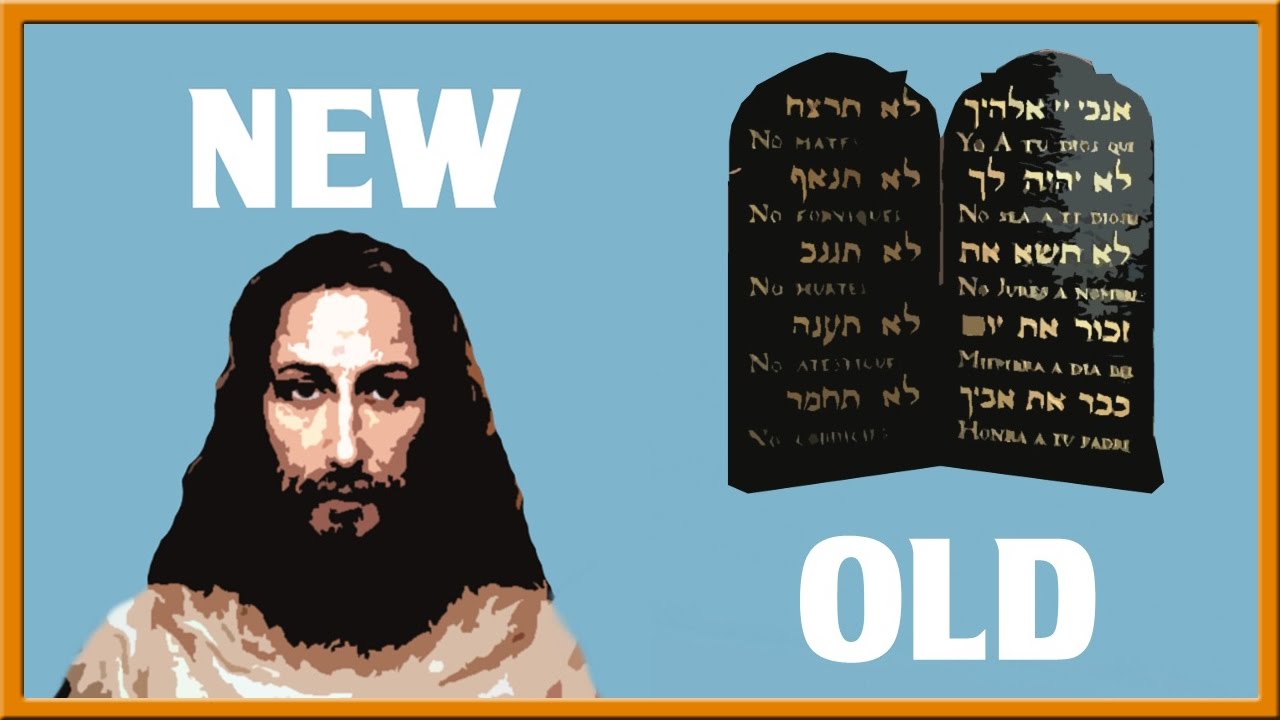
Is Jesus Moses 2.0?

Image result for jesus and moses 2.0


Why does the modern church mix and match and patch together the Old and New Testament Scriptures reading the Bible like a flat one-dimensional book?

Why do modern Christians post the ten commandments in classrooms and courthouses but not portions of the sermon on the mount?

Why do we parrot Billy Graham "the bible says" giving equal authority to every text within the written scriptures and usually not distinguishing between the written word and the living Word?

It is easy to promote violence form the Old Testament but not as easy to promote violence from the New Testament.

Is Jesus Moses 2.0 or is Jesus something greater?


(questions and ideas from Andy Stanley's new book, Irresistible)


Thursday, October 18, 2018

Mark: God's Wisdom and the Riddle of Christ


Image result for the puzzle of Christ


Jesus was God's wisdom incarnate and his teachings and actions were filled with riddles and irony. Jesus' riddles can awaken our stunted imaginations and draw us deeper into the character and life of his loving Father. Jesus disciples find him asleep on a boat, save us. They did not see Jesus' deeper meaning of him dying for humanity. Jonah is also found sleeping on a ship and he saves them by throwing himself overboard to what he thought was his death but turned into a kind of resurrection.

Jesus says his followers will be baptized in the waters and rivers of the Spirit of God. Like the first creation where the waters rise up, so Jesus is living water to those who will drink from him. The Gospel of Mark is about multiple healings of blind people as God wants to lift all of vulnerable humanity out of the swamp of spiritual blindness. As Israel listened to Moses with radiance glory, at the transfiguration, God speaks to Jesus disciples to listen to him as Jesus radiated with the glory of God.

Mark's Gospel starts his gospel out with the baptism of Jesus where the verb "torn" is the only place used in the gospels as in Isaiah 64:1 were Isaiah cries for God to tear open the heavens and come down to Israel. Mark's gospel is God's answer to Isaiah's cry for God to come and rule over Israel again. There is also this purifying judgment in Mark where he speaks of Isaiah but also alludes to the messenger preparing the way for the Messiah in Malachi as God purifies his people.

Mark reads Israel's story figurally as God radical love for Israel and all people. Some of us are bad interpreters of riddles and we miss in Mark's apocalyptic vision in chapter 13 is not about cosmic annihilation but rather the restoration of Israel. This morphs into the restoration of all things in Luke, Paul, and John's apocalyptic vision which the reader often misses.

The climax of the Jesus story is his crucifixion and vindication. When Jesus tells the parable of the wicked tenants in chapter 12, there are echoes and riddles to disclose in this parable. When the wicked tenants say "come, let us kill him" (Mk.12:7) this echoes back to the sacrifice of Isaac, the murder of a vineyard's son where death is not the final word. Or how about the story of Joseph plotting to kill their brother who used the exact same language of murdering him (Gen.37:20). Again, this figurative resurrection of Joseph foreshadows Jesus' fate.


Wednesday, October 17, 2018

What the Hell?


Image result for what the hell?


The word "hell" actually does not show up in the original Greek Septuagint Bible. It is an English translation from the Greek words, Hades, Tartaroo, and Genhena. If you want to see how bad our English translations are with the word 'Hell,' check out how many times it is used in different translations and then you will start to see the problem.

The message - 56 times

King James - 54 times

New King James - 32 times

New Living Translation  -  19 times

New International - 14 times

New American Standard - 13 times


Any Questions?


The Rich Man, Lazarus, and Jonah Stories


Image result for the rich man, lazarus, and jonah stories


"The chasm between "heaven" and "hell" in this story does not seem infinite. The rich man, though dead, is not beyond the reach of love. All he needs is for someone naked and alone to seek him out in hell---a loving emissary of the naked God, come to liberate him from his own internal prison."
- Doug Frank  (A Gentler God, p.302)

"Jesus once treated a crowd that had gathered around him to these cryptic words: "This generation is an evil generation; it asks for a sign, but no sign will be given except the sign of Jonah. For just as Jonah became a sign to the people of Ninevah, so the human son will be to this generation (Luke 11:29-30).

How does Jonah point to Jesus? Perhaps by spending three days in Sheol and then returning----a human son who goes to hell and back. When Jonah finally meets the Ninevites and warns them about God's judgment, he speaks with the conviction of one who has experienced that judgment----not as condemnation, but as salvation. He knows that hell's eternity is not literally eternal, and those who find themselves alone in their sufferings there are not literally alone.

It will be a cold day in hell before evangelical preachers use the story of Jonah to explain that "eternal" flames are not without end and that Jesus is present in hell. But large sectors of the Christian church have kept alive the strange idea that Jesus went to hell to put and end to its tortures."
- Doug Frank, pp.309-310).