Wednesday, November 23, 2016

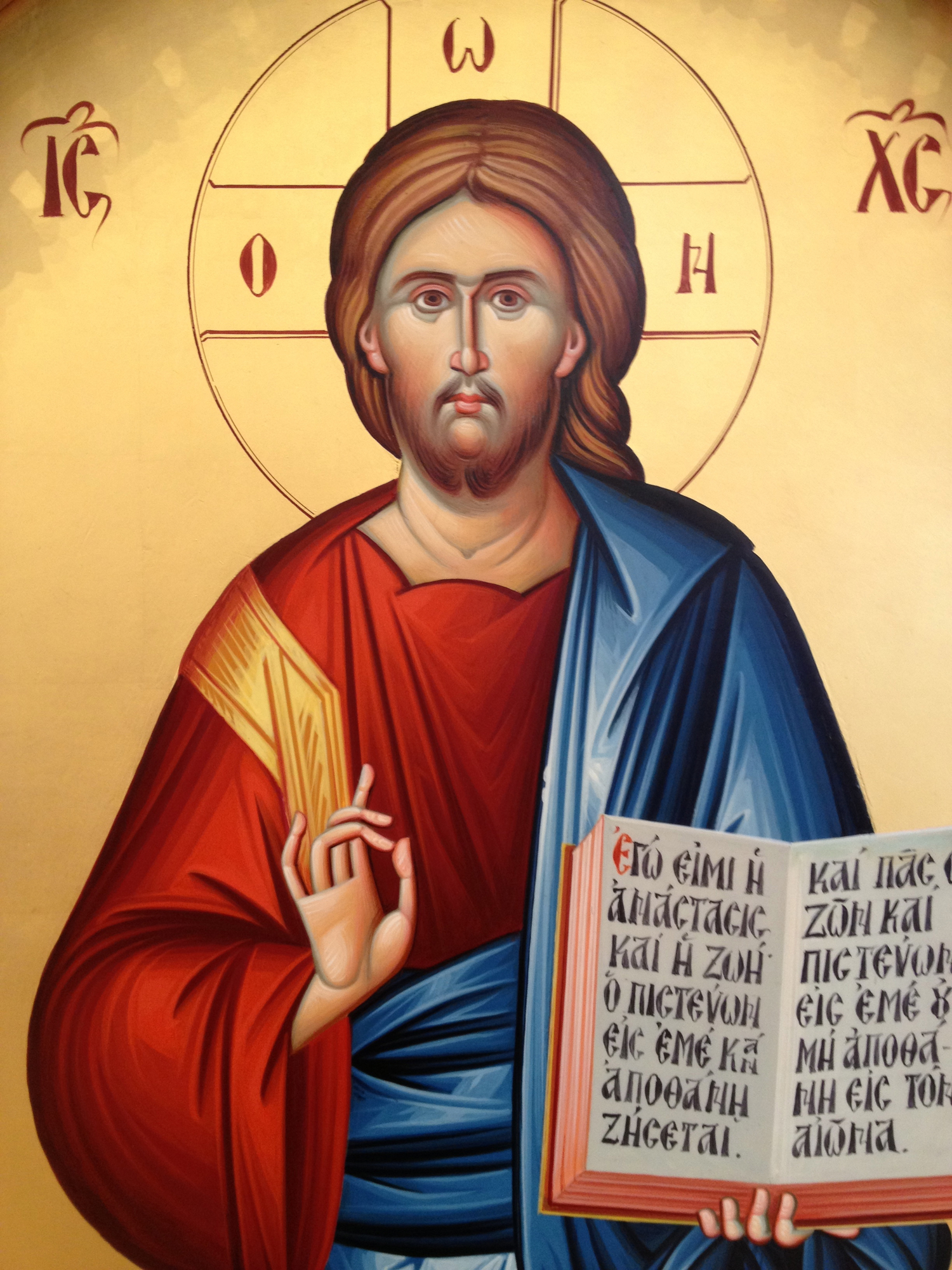
Subordinationism and the Trinity


There is no doubt in my mind that the Great Church as a whole (both East and West including the magisterial Protestant Reformers) believed in a hierarchy within the immanent Trinity. “Where the reality exists there must also be the corresponding possibility” (Barth). If in the economic Trinity we see (e.g., in John 14-17) a subordination of the Son to the Father there must also be subordination of the Son to the Father in the immanent Trinity. The monarchy of the Father is clear in the Cappadocian Fathers and has always been taught by the Eastern churches. Moltmann is one contemporary theologian who has tried to soften this hierarchical notion of the Trinity by speculating about different patterns of relationships (including of authority) within the Godhead tied to the stages of the Kingdom of God in history. He emphasizes ways in which the Father is dependent on the Son and the Spirit which is true enough but does nothing to undo what the church fathers meant by hierarchy within the immanent Trinity.

So what did they mean? What did the Cappadocian Fathers and what does the Eastern Church (or churches) mean by the “monarchy of the Father?” And how did they/do they avoid Arianism or Semi-Arianism (heresies that deny the equality of the Son with the Father in terms of divinity)? That’s a very long and complicated story, of course, so I can only answer in a nutshell. By the “monarchy of the Father” the Cappadocian Fathers meant only that the Father is the source or “fount” of divinity within the Godhead; the Son and the Spirit derive their deity from the Father eternally (so there is no question of inequality of being). Their favorite analogy was the sun and its light and heat. There is no imagining the sun without its light and heat and yet it is the source of them. So the Son, who became Jesus Christ in the incarnation, is begotten of the Father from eternity (not in time) (the technical term is generated but it means the same) and the Holy Spirit proceeds from the Father (and the Western church added filioque—“and the Son). (I happen to think the filioque addition to the Niceno-Constantinopolitan Creed was a mistake and it should be undone or revised to say “through the Son” although that has its problems as well.) In brief, then (without going into all the ins and outs of the filioque controversy or even the debates about the generation and procession of the Son and the Spirit), the “monarchy of the Father” in traditional, orthodox doctrine means only that the Father is the eternal, ontological source, fount, origin of the Son and the Spirit. It has nothing to do with authority over which, if imported into the immanent Trinity, would imply a kind of subordinationism.

So why is it important to have a monarchy of the Father within the immanent Trinity? The Cappadocian Fathers argued it is necessary to preserve and protect the distinctiveness of the three hypostases. Some also argue it is necessary to preserve and protect the connection between the economic Trinity (in which there is clearly subordination) and the immanent Trinity.
Now, there are so many issues here that I can’t even begin to discuss them all! But it is absolutely crucial to understand this distinction between the immanent Trinity and the economic Trinity before diving into the current evangelical controversy over the Trinity.

My suspicion is that many evangelicals who write about the subject are not properly or carefully enough making this distinction. My theses going into this discussion are that 1) There is subordination of the Son and Spirit within the economic Trinity including in terms of authority over, and 2) The subordination of the Son and Spirit to the Father within the immanent Trinity has only to do with source, fount, origin of the divinity of the Son and the Spirit which does not automatically include a hierarchy of authority (i.e., obedience to). And I will argue that we cannot claim to know very much about the immanent Trinity, so even that (thesis 2) is arguable so long as we do affirm the immanent Trinity. In sum and in brief, I will argue that it is possible (if not necessary) to believe in the “monarchy of the Father” even within the immanent Trinity without making the Son and Spirit subordinate to the Father in terms of authority (i.e., obedience).

Saturday, November 19, 2016

Eastern Orthodox View of Trinity and Subordinationism


There has been an ongoing debate among Evangelicals over the eternal subordination of the Son and the eternal subordination of women or wives. I have been looking at the early church fathers on this issue but the one group that has some of the best insights on issues like this is the Eastern Orthodox. Here is what the Eastern Orthodox say:

According to the Orthodox view, the Son or Logos is derived from the Father who alone is without cause or origin. This is not a subordination in time, since the Son is co-eternal with the Father or even in terms of the co-equal uncreated nature shared by the Father and Son. However, this view is sometimes considered a form of subordinationism by Western Christians, and the Western view is often viewed by the Eastern Church as being close to Modalism.[28][page needed][29] Regarding this point, the Revised Catechism of the Orthodox Faith notes that "This (the Orthodox view) is sometimes misunderstood (by Christians influenced by Western teachings on the Trinity) as "subordinationism," but this term cannot rightly be applied to the Orthodox teaching because it can be said that God the Father depends on the Son to be called "Father..."[30] (from Wikipedia)

The problem in western theology by some Evangelicals is they try to focus on the Divine Trinity being hierarchal rather than relational. Those who speak of the son’s eternal subordination to the Father and therefore women’s subordination for eternity has been a gross reaction to feminism showing little historical awareness to the ancient creeds or tradition of the church


Thursday, November 17, 2016

Impotent Rage

Impotent Rage About Trump Directed at Steve Bannon
The witch hunt against Bannon is animated by the impotent rage of the "anyone but Trumpers."

Jewish Press  


Stephen K. Bannon, president-elect Trump's Chief Strategist
Photo Credit: YouTube.com


It didn’t take haters of president-elect Trump long to shift their negative energy away from Trump and instead focus it towards an easier target: former Breitbart editor-in-chief and newly named Trump’s chief strategist Stephen Bannon.

Trump won the election, he isn’t going anywhere and people, especially liberal Democrats who have been lulled by eight years of validation, are angry. Also greatly peeved are the traditional establishment conservatives who refused to back the aggressively non-intellectual Donald Trump. It was not only shocking but personally insulting to many of the elites that the “loser” actually won. Much better to throw word-bombs at a liberal for four years than to have to eat crow – picking feathers out of one’s teeth is never fun.

So when the president-elect filled his first two positions and one of the two was an establishment stalwart, Republican National Committee chair Reince Priebus as chief of staff, heads swiveled and the keyboards pointed towards the second, the easier target, Bannon.
Bannon has been decisively labeled “an anti-Semite,”  and “alt-right,” and therefore “racist.” The anti-Semite charge has been traced back to claims made by an ex-wife during divorce proceedings.

The most inflammatory thing she claimed he said is he didn’t want to send their girls to a school with “too many Jews.” But they did send their girls there. Bannon denies the charge. That’s it for evidence of anti-Semitism.  Really? Words uttered in a custody battle?
Anyone remember the claim that Hillary Clinton referred to one of her husband’s Jewish staffers as a “[expletive verb deleted] Jew [expletive noun deleted]”? Of course it was never proven that she said that – same with Bannon’s alleged anti-Semitic remarks – but it was repeated and rumors about it persisted, yet none ever rose to the level of a disqualifier for public office, let alone for an advisory role.

Since we can’t know the truth about whether Bannon uttered what was attributed to him by his ex-wife in a custody battle, what do people who know or worked with Bannon have to say about whether the man is an anti-Semite?
David Goldman, the economist and author who used to write under the pen name Spengler, wrote from personal experience that he was confident Bannon is not anti-Semitic. Writing on his Facebook wall, Goldman responded to a post on a conservative news site which blasted Bannon for promoting  “anti-Semitism,” “racism” and “white nationalism.”
Goldman did a Google search of the site.
I looked through roughly a thousand articles and found nothing but pro-Israel, pro-Jewish articles that might well have appeared in Israel Hayom. There is not a shred of evidence–not a single article–that supports [John] Podhoretz’ allegation that Bannon and Breitbart aid and abet anti-Semitic views.
Earlier in the day Goldman took the Financial Times to task for the same kind of evidence-free accusation. “I know Steve Bannon, and have had several long discussions with him about politics. I first met him when he approached me at a conference to tell me that he liked my writing, which is unabashedly Zionist,” Goldman posted. Goldman responded to an email query with:”I discussed Israel with him on a couple of occasions and he is a gung-ho pro-Zionist conservative.”
Joel B. Pollak is senior editor-at-large at Breitbart News and an Orthodox Jew. He has worked with Bannon for years and in response to the brouhaha wrote a column on Monday, “Stephen K, Bannon, Friend of the Jewish People, Defender of Israel.” Pollak elaborated on his full-throated defense of Bannon in a telephone call late Monday evening. “Steve Bannon is the best friend Israel has ever had in the White House,” Pollak said. “Under Bannon, Breitbart has expanded to open a Jerusalem bureau, and it consistently posts positive stories about Israel.”

So what about the charges of anti-Semitism? Pollak laughed. “I won’t tell you which ones, but during the [Republican] primary I had to repeatedly talk Steve off a ledge when he became irate that one or more of the contenders made comments Steve interpreted as anti-Semitic.” If anything, Pollak explained, “Steve is overly-sensitive to statements by others he thinks are anti-Semitic.”
No one claims Bannon is a pussycat. Several people who spoke out against the anti-Semitism claim willingly described Bannon as “tough” or “difficult” or “as hard-[expletive deleted]as they come,” but no one has come forward with any basis for calling Bannon anti-Semitic.
What about the claims of Bannon promoting Breitbart as a refuge for alt-right views?
Pollak explained that saying Breitbart promotes “alt-right” because Breitbart contains reporting on the alt-right is “like saying CNN promotes Black Lives Matter because CNN reports on the BLM movement.”

Indeed, there are articles about the alt-right on Breitbart. The most expansive one is co-written by the alleged icon of the alt-right, Milo Yiannopoulis, “An Establishment Conservative’s Guide to the Alt-Right.” In a 5200-plus word article Yiannopoulis and his co-author Allum Bokhari debunk myths while creating a taxonomy of the alt-right movement. Much of the alt-right, the two explain, focuses on community-building and values lifestyles. The “prankstering” or outrageous “memes” appear to be the source of much misunderstanding about the movement, which the two explain is even more hilarious to the alt-righters who practically choke on how those they aggravate “get played.”
But then there are the “1488ers,” who are just a small segment of the movement. Yiannopoulis and Bokhari explain:
1488ers are the equivalent of the Black Lives Matter supporters who call for the deaths of policemen, or feminists who unironically want to #KillAllMen. Of course, the difference is that while the media pretend the latter are either non-existent, or a tiny extremist minority, they consider 1488ers to constitute the whole of the alt-right.
Those looking for Nazis under the bed can rest assured that they do exist. On the other hand, there’s just not very many of them, no-one really likes them, and they’re unlikely to achieve anything significant in the alt-right. Yiannopoulis also said that “he is too pro-Israel” even for non-1488er alt-rightists to include him in their movement. The same is surely true for Breitbart itself, and for Bannon. So the scary bogey-men of the alt-right is a fringe element of a fringe element, about which Breitbart runs articles, just – to quote Pollak – as CNN runs articles about the recent attention-grabbing movement on the left, Black Lives Matter.

Similarly, of the recent anti-Trump protests many involved were just dispirited Hillary fans, while a few called for violent revolution and there was even a sign held by one protester advocating “rape Melania.”  Should all Clinton-voters be condemned? Should Hillary Clinton? The blogger Jeff Dunetz wrote for Breitbart for several years. Although he never met Bannon, Dunetz wrote a column on his own blog on Monday, with a commonsense title: “If Steve Bannon is an anti-Semite, Why Can’t I Find Any Anti-Semitism?” Dunetz remarked on a column written by David Horowitz which ran at Breitbart. In that column Horowitz referred to longtime neocon leader Bill Kristol as a “renegade Jew” for refusing to support the Republican Party nominee, Donald Trump. But Horowitz – a Jew – wrote the column, not Bannon.

It is true that the Horowitz column ran at Breitbart, but that does not make Breitbart or Steve Bannon any more anti-Semitic than the New York Times running a column written by Mahmoud Abbas makes that paper a Holocaust-denier. And just because the Democratic Party endorsed the Black Lives Mater platform does not necessarily make it or its standard bearers anti-Israel or anti-police, although the BLM certainly is the latter and has officially charged Israel with being an Apartheid State and committing genocide.

Lori Lowenthal Marcus
About the Author: Lori Lowenthal Marcus is a contributor to the JewishPress.com. A graduate of Harvard Law School, she previously practiced First Amendment law and taught in Philadelphia-area graduate and law schools. You can reach her by email: Lori@JewishPressOnline.com


Political Correctness, The Media, and Character Assassination


Anti-Semitism as Political Assassination: The Smearing of Steve Bannon


Marcus Alethia, Ph.D.

The corporate media would have us believe that President-Elect Trump’s newly appointed Chief Strategist and Senior Counselor Stephen K Bannon is a raging anti-Semite, and “white supremacist.” Though best known now for his role in the Trump campaign, Bannon is a former US Naval officer, Goldman Sachs banker, director of Earth-science research at Biosphere 2, film producer, and chairman of Breitbart News. Over the last 24 hours he has been subjected to a well-orchestrated crescendo of op-eds and tweets attacking his character and political views.

For instance, Esquire’s resident hysteric Charles Pierce would have us believe that “The hiring of Steve Bannon as a WH policy advisor is exactly the same as hiring David Duke.”
Meanwhile, the Daily News’ chief fabulist-in-training Shaun King purports to explain how “Donald Trump is using Steve Bannon to turn the GOP into the new KKK.”
And deservedly obscure presidential candidate Evan McMullin asks “Will any national level GOP leaders condemn @realDonaldTrump’s appointment of anti-Semite Steve Bannon to senior White House role?”

Others using the anti-Semitism slur include Newsweek’s Kurt Eichenwald, Huffington Post’s Sam Stein, MSNBC’s Rachel Maddow, the ADL’s Jonathan Greenblatt, US Senator Ron Wyden, Slate, Salon, Forward, and a cast of thousands more piling on. Many are Jewish, though not all.
As an American Jew, I am completely horrified at this reprehensible smear campaign. It is shameful. Sadly, it is the norm. The media know that the charge of anti-Semitism is tremendously damaging. If they get away with using this on Bannon, I fear they will continue using it towards many others associated with the Trump administration. They go low. Period.


The fact that this is a smear without foundation seem obvious from statements made by Jewish friends and associates of Bannon.  Former Breitbart reporter Ben Shapiro left the news site after a falling out with Bannon, and there is no love lost between the two. Yet he writes, “I have no evidence that Bannon’s a racist or that he’s an anti-Semite.” David Horowitz states that the accusation is completely without foundation.   Milo Yiannopoulos, one of Breitbart’s main writers, wrote many of the headlines Bannon is currently under fire for, and he’s half Jewish. Orthodox Jew Joel Pollack, Breitbart staff writer, states “Steve is a friend of the Jewish people and a defender of Israel, as well as being a passionate American patriot and a great leader,” and he goes on to say that not only is Bannon not anti-Semitic, “if anything, he is overly sensitive about it, and often takes offense on Jews’ behalf.”

One would think that with a charge that carries the heavy social opprobrium of anti-Semitism there would be some evidentiary standard necessary, but in The Current Year one would be entirely wrong.  Here is the case for Bannon’s anti-Semitism, as made in the press so far:

Evidence A. In divorce proceedings between Bannon and his former wife, Bannon was reported to have made a comment to the effect that he didn’t want his daughters to go to Archer, an elite private school in West Los Angeles, because “the ex-wife claimed Bannon “went on to say the biggest problem he had with Archer is the number of Jews that attend. He said that he doesn’t like Jews and that he doesn’t like the way they raise their kids to be ‘whiney brats’ and that he didn’t want the girls going to school with Jews.”
Bannon denies making any of these statements, and people say a lot of things during divorce proceedings. The kids ended up going to the school. Unfortunately, there is no reporting on to what extent they were actually surrounded by whiny brats.

Evidence B. Breitbart ran an article titled “Bill Kristol, Republican Spoiler, Renegade Jew.” The article was written by the aforementioned Horowitz, who wrote the headline as well.

Evidence C. Bannon said in an interview in July that Breitbart is now the platform for the “Alt Right.”

The first claim is hearsay. If Bannon really “didn’t like Jews,” it is unlikely he would surround himself with so many at Breitbart, open a Breitbart office in Jerusalem, work for a Jewish CEO who supported him, and join the Trump campaign with its Jewish advisors, speechwriters (Stephen Miller), and family members. It is entirely possible that Bannon visited the school and found that the students were indeed spoiled Jewish brats. This doesn’t suggest that all Jewish children are spoiled brats, or that all spoiled brats are Jewish, or that Bannon thought either of these things were true.  Perhaps Bannon was describing the situation accurately, or perhaps he was being a bit unfair, or perhaps he never said any of this, or perhaps he meant it as more of a joke.  The appropriate response to this question is — who cares? While I don’t personally feel that most Jewish parents raise whiny, spoiled brats, some do, and I’d expect more of this at elite private schools than elsewhere.  I too would want to avoid those classmates for my children.

As far as the “Renegade Jew” title, the fact it was written by a Jew essentially confirms the lack of anti-Semitic intent. Accusing Horowitz of anti-Semitism or being a self-hating Jew is laughable to anyone who has read his Zionist writing over the years.

So finally we come to Bannon’s statement that Breitbart is a home for the Alt Right. The term Alt Right leaped into prominence this last year but has been enormously contested. There is no sense in which all the parties that use the term — both pro and con — to mean anything even close to the same thing. Some who self-identify with the Alt Right are expressly counter-Semitic. Some are not.
My personal take on this would be that when Bannon said Breitbart was a home for the Alt Right, he said this in error. There are many variants of Alt Right, much discussion about what it is, with little consensus, and many camps. I have no interest in exploring what the Alt Right is or isn’t here at all, but it is worth noting that many have claimed the title for themselves. Breitbart, however, simply isn’t thought of by most as being “Alt Right”. Thus, neither is Bannon. At best he might be considered “alt-light.” But for most people on the Alt Right and in general, Breitbart is simply a venue for the contemporary right, not the edgier and more transgressive Alt Right.

Thus the links between Bannon and anti-Semitism or “white supremacism” are essentially zero.
What bothers me most about this absurd episode, as a Jew myself, and a patriotic American, is the way accusations of anti-Semitism can now be deployed at virtually anyone with no evidence needed, as a form of political character assassination. The piling on by the corporate media and liberal pundits is shocking and alarming.  Bannon has been smeared. His family, friends, colleagues, and the Trump presidency have been tainted by spurious accusations of anti-Semitism, in the absence of any evidence. This is a nakedly cynical attempt to demean an individual, an organization he headed, and the people he is associated with. It is orchestrated for political purposes — to keep Bannon, a voice for real fundamental change and reform, out of the Trump administration. It is designed to undermine the President-elect and his administration’s legitimacy. It is a yet another media-driven disgrace, driven largely, though not only, by Jewish liberals who resent their loss of influence during the ascendancy of the right, as democratically chosen by the American people.


Tuesday, November 15, 2016

What Every Church Needs to Hear

This sermon by Jason Micheli

For the last 18 months, according to the Principalities and Powers, this Tuesday’s election was supposed to be the most important event in our lifetimes if not in history, an odd and hyperbolic claim for Christians to accept given that the only democratic election portrayed in the Gospels is when we choose Barrabbas over Jesus.

     Christians are right to be passionate about the candidates causes for whom they advocated; likewise, Christians are right to feel queasy-to-appalled about the rhetoric with which Tuesday’s results were purchased. Still, as divided as we are as country, as euphoric as some are over Tuesday’s results and as distraught as others are over Tuesday’s results, it’s hard to imagine, as Scot McKnight has quipped, that Christians in the first century were so preoccupied as us with whether it would be Nero or Britannicus who would succeed the Emperor Claudius. That’s because Christians in the first century already were shorn of the mythologies into which we as American Christians have been enculturated.

     Many of us have been conditioned by the liturgies of Civil Religion to believe that America is the Kingdom and to believe, as a matter of consequence, that the Republican and Democratic parties are mutually exclusive means to serve that Kingdom.
     The first Christians knew, as a fundamental of their faith, what we so often do not. They knew as basic correlative to their confession that Rome was not the Kingdom.
     And knowing that Rome was not the Kingdom, the first Christians knew better than we that the politics made available to them by Rome were not God’s politics.
     But rather in world captive to the politics called empire, God had taken flesh and sent his Spirit in order to make a different politics possible- the politics we call Church.
     The Church doesn’t have politics; as Stanley Hauerwas says, the Church is a politics.
————————
    The way Jesus negotiates the question put to him in Mark 12 clarifies that statement: The Church doesn’t have a politics; the Church is a politics.
     Before I continue, I should point out that Jesus gets crucified right after today’s passage. If I can just do better than Jesus, I’ll be happy.
     Given our hyper-partisan culture, if we can all just take a deep breath, if you can just trust me for the next few minutes, and if we can make it, in Jesus’ name, to the end of the sermon together- if we can just do that then Aldersgate Church will be like a light to the nation, like a city shining on a hill.
     To insure I don’t end, like Jesus, up on a cross at the end of this scripture, I want to be as simple and straightforward as I can today. No jokes, no inspiring stories and absolutely no personal opinions- you have my word on that.
     I just want to open up today’s scripture passage, unpack it for you and then offer you one clear, bipartisan recommendation that I believe comes out of this scripture that we can use as we come out of this election cycle.

     “Teacher, is it lawful to pay taxes to Caesar or not? Should we or shouldn’t we? Yes or no?” 
     The first thing this passage makes unavoidable is that Jesus is political. It’s not that he’s not.
     I know some of you have a Joel Osteen notion of Christianity: that Christianity is a private religion of the heart, and Jesus is about spiritual things.
     The only problem with that kind of Christianity is that it requires a bible other than the one God has given us.
     Mary’s pregnancy begins with her singing of how her in-utero Messiah will one day topple rulers from their thrones and send the rich away with nothing.
     Jesus kicks off his ministry by declaring the Year of Jubilee: the forgiveness of all monetary debt.
     And for 3 years, Jesus teaches about the Kingdom of God and, because Jesus was a Jew, he didn’t have pearly gates in mind. He was talking about the here and now.
     Jesus is political.
     The Gospel story begins by telling you about a tax levied by Caesar Augustus to make the Jews pay for their own subjugation.
     The Gospel story ends with Pilate killing Jesus- on what charges?
     On charges of claiming to be a rival king and telling his followers not to pay the tax to Caesar.
     The tax in question was the Roman head tax, levied for the privilege of being a Roman citizen. The head tax could only be paid with the silver denarius from the imperial mint.
    The denarius was the equivalent of a quarter.
    So it’s not that the tax was onerous.
     It was offensive.

     One side of the coin bore the image of the emperor, Caesar Tiberius, and on the other side was the inscription: ‘Caesar Tiberius, Son of God, our Great, High Priest.’ 
     Carrying the coin broke the first and most important commandment: ‘You shall have no other gods before me.’ 
     And because it broke the commandments, the coin rendered anyone who carried it ritually unclean.
     It couldn’t be carried into the Temple, which is why money changers set up shop on the Temple grounds to profit off the Jews who needed to exchange currency before they worshipped.
     You see how it works?     

     “Teacher, is it lawful to pay taxes to Caesar or not?”
     What they’re really asking, here, is about a whole lot more than taxes.
     But to see that, to see what they’re really asking, you’ve got to dig deeper in to the passage.
     Today’s passage takes place on the Tuesday before the Friday Jesus dies.
     On the Sunday before this passage, Jesus rides into Jerusalem to a king’s welcome.
     On Monday, the day before this passage, Jesus ‘cleanses’ the Temple. Jesus has a temper tantrum, crashing over all the cash registers of the money changers and animal sellers and driving them from the Temple grounds with a whip.
     And that’s when they decide to kill Jesus.
     Why?
     To answer that question, you need to know a little history.
     200 years before today’s passage, Israel suffered under a different empire, a Greek one. And during that time, there was a guerrilla leader named Judas Maccabeus. He was known as the Sledgehammer.

     The Sledgehammer’s father had commissioned him to “avenge the wrong done by our enemies and to (pay attention) pay back to the Gentiles what they deserve.” 
     So Judas the Sledgehammer rode into Jerusalem with an army of followers to a king’s welcome. He promised to bring a new kingdom. He symbolically cleansed the Temple of Gentiles, and he told his followers not to pay taxes to their oppressors.
     Judas Maccabeus, the Sledgehammer, got rid of the Greek Kingdom only to turn around and sign a treaty with Rome. He traded one kingdom for another just like it.
     But not before Judas the Sledgehammer becomes the prototype for the kind of Messiah Israel expected.
     That was 200 years before today’s passage.

     About 25 years before today’s passage, when Jesus was just a kindergartner, another Judas, this one named after that first Sledgehammer, Judas the Galilean- he called on Jews to refuse paying the Roman head tax.
     With an armed band he rode into Jerusalem to shouts of ‘hosanna,’ he cleansed the Temple
     And then he declared that he was going to bring a new kingdom with God as their King.
     Judas the Galilean was executed by Rome.
     You see what’s going on?
     Jesus the Galilean has been teaching about the Kingdom for 3 years.
     He’s ridden into Jerusalem to a Messiah’s welcome.
     He’s just cleansed the Temple and driven out the money changers.
     The only thing left for Jesus the Sledgehammer to do is declare a revolution.
     That’s why the Pharisees and Herodians trap Jesus with a question about this tax:

           Jesus, do you want a revolution or not? is the real question.
Come down off the fence Jesus.
Which side are you on?
     Politics makes for strange bedfellows.
     For the Pharisees and the Herodians to cooperate on anything is like Nancy Pelosi and Paul Ryan co-sponsoring a budget bill.
     And that’s not even an exaggeration because the Pharisees and the Herodians were the two political parties of Jesus’ day.
     The Sadducees were theological opponents of Jesus.
     But the Pharisees and the Herodians were first century political parties.
     The Pharisees and the Herodians were the Left and the Right political options.
     And instead of Donkeys and Pachyderms, you can think Swords and Sledgehammers.

     The Herodians were the party that supported the current administration. They thought government was good.
     Rome, after all, had brought roads, clean water, sanitation, and- even if it took a sword- Rome had brought stability to Israel.
     The last thing the Herodians wanted was a revolution, and if Jesus says that’s what he’s bringing, they’ll march straight off to Pilate and turn him in.
     The Pharisees were the party that despised the current administration. The Pharisees were bible-believing observers of God’s commandments.
     They believed a coin with Caesar’s image and ‘Son of God’ printed on it was just one example of how the administration forced people of faith to compromise their convictions.
     The Pharisees wanted regime change. They wanted another Sledgehammer. They wanted a revolution. They just didn’t want it being brought by a 3rd Party like Jesus, who’d made a habit of pushing their polls numbers down.
     And so, if Jesus says he’s not bringing a revolution, the Pharisees will get what they want: because all of Jesus’ followers will think Jesus wasn’t really serious about this Kingdom of God stuff, and they’ll write him off and walk away.
     That’s the trap.
   
  “Teacher, is it lawful to pay taxes to Caesar or not? Is it or isn’t it?’ 
     If Jesus says no, it will mean his death.
     If Jesus says yes, it will mean the death of his movement.
     Taxes to Caesar or not, Jesus?
     Which is it going to be? The Sword or the Sledgehammer?
     Which party do you belong to?
     You’ve got to choose one or the other.
     What are your politics Jesus?
     Jesus asks for the coin.
     And then he asks the two political parties: ‘Whose image is on this?’ 
    And the Greek word Jesus uses for image is ‘eikon,’ the same word from the very beginning of the bible when it says that you and I were created to be ‘eikons of God.’
    Eikons of Caesar. Eikons of God.

    Jesus looks at the coin and he says ‘Give to Caesar what is Caesar’s but give to God what is God’s.’ 
    But even then it’s not that simple or clear because the word Jesus uses for ‘give’ isn’t the same word the two parties used when they asked their question.
     When the Pharisees and Herodians asked their question, they’d used a word that means ‘give,’ as in ‘to present a gift.’
    But when Jesus replies to their question, he changes the word.
Instead Jesus the very same word Judas the Sledgehammer had used 200 years earlier. Jesus says:

‘Pay back to Caesar what he deserves and pay back to God what God deserves.’ 
    You see how ambivalent Jesus’ answer is?
     What does a tyrant deserve? His money? Sure, it’s got his picture on it. He paid for it. Give it back to him.
     But what else does Caesar deserve? Resistance? You bet.
     And what does God deserve from you?
     Everything.
     Everything.

    Jesus is saying is: ‘You can give to Caesar what bears his image, but you can’t let Caesar stamp his image on you because you bear God’s image.’ 
    Jesus is saying you can give to Caesar what belongs to Caesar.
    But you can’t give to Caesar, you can’t give to the Nation, you can’t give to your Politics, you can’t give to your Ideology, you can’t give to your Party Affiliation-
  you can’t give to those things, what they ask of you:
your ultimate allegiance.
     You see, like a good press secretary, Jesus refuses the premise of their question.
     The Pharisees and the Herodians assume a 2-Party System.
     They assume it’s a choice between the kingdom they have now.
     Or another kingdom not too different.
    They assume the only choice is between the Sledgehammer or the Sword.
     But like a good politician, Jesus refuses their either/or premise.
     He won’t be put in one their boxes. He won’t choose sides.
     Because Jesus the Galilean was leading a different kind of revolution than Judas the Galilean.
     A revolution not with a sword or a sledgehammer.
     But with a cross.
    Jesus refuses to accept their premise.
    Because his movement wasn’t about defeating his opponents.
    His movement was about dying for his opponents.
     And that’s a politics that qualifies and complicates every other politics.
     If you’re like me, social media has been a good and uplifting use of your time this week.

    The Bible has a word for the red and blue rhetoric we’ve posted and tweeted and liked and shared this week.
     Idolatry.
     And for some of you, left and right, this is a serious spiritual problem.
     So here’s my one, simple bipartisan post-election prescription. It’s one I think we can all agree upon and I think it’s one that might actually do some public good:
     Don’t do to Jesus what Jesus wouldn’t do to himself. 
     I wanted to get you all plastic bracelets with the acronym on it but the shipping was too expensive.
     Don’t do to Jesus what Jesus wouldn’t do to himself. 
     Don’t put Jesus in a box. Don’t make Jesus choose sides. Don’t put a sword or a sledgehammer, an elephant or a donkey, in Jesus’ hands.
     Don’t say Jesus is for this Party. Don’t say this is the Christian position on this issue. Don’t say faithful Jesus followers must back this agenda or demonize those who disagree.
     Because we all know it’s more complicated than that. Because we’re more complicated than 140 characters and 30 second soundbites.
     And so is the Gospel.

     Don’t do to Jesus what Jesus wouldn’t do to himself. 
     I mean, this might be an epiphany newsflash for some of you, but you can find good, faithful, sincere, bible-believing, Jesus-following Christians everywhere all along the political spectrum.
    You know how I know that? You’re sitting in front of me.
    But what you must not do is insist that Jesus is for this or that politics.
    Jesus wouldn’t do that to himself so why are you doing it to him? 
     You’re mixing up God and Caesar.
     You’re making Jesus fit your politics instead of conforming your politics to Jesus.
      You’re committing idolatry, using your ultimate allegiance to bless and baptize your earthly opinions.

    Don’t do to Jesus what Jesus wouldn’t do to himself. 
    Because when you do-
    When you do to Jesus what he wouldn’t do to himself, it becomes too easy to believe that the problems in the world are because of the people on the Left or the Right instead of what the Gospel says: that the problem in the world is what’s in here (the heart) in all of us.
     When you do to Jesus what he wouldn’t do to himself, it becomes harder and harder to like your neighbor and it becomes impossible to love your enemy.
     When you do to Jesus what he wouldn’t do to himself, you forget that the Kingdom Jesus’ death and resurrection kicked off isn’t a Kingdom that any political party can ever create.
     When you do to Jesus what he wouldn’t do to himself, you forget that the Kingdom launched by Jesus’ death and resurrection is a Kingdom
where trespasses are forgiven, gratis;
where grace is offered, free of charge;
where enemies are prayed for on a weekly basis;
where peace isn’t a soundbite but a practice;
where money is shared without debate so that the poor would be filled; where our earthly differences are swallowed up because its more important for us to swallow the body and blood of Christ at this Table together.

     When you do to Jesus what he wouldn’t do to himself, you forget that the Kingdom Jesus brings is you. Us. The Church. We’re Jesus’ politics.


Monday, November 14, 2016

I was Wrong!


11-11-2016 ABC NEWS

As I move on from the aftermath of the presidential election, these words from the Latin Mass I attended as a youth bounced around in my head -- "mea culpa, mea culpa, mea maxima culpa."
The rough translation is "My fault, My fault, My greatest fault".

I want to take this opportunity to say I was wrong about who would win the election. But my biggest regret, and what I would like to apologize for is the arrogant, close-minded, judgmental, and sometimes mean-spirited way I related to many who believed Trump would win.
They were right, and I was wrong.

I had seen many things coming in this election that turned out to be on target, but for the big finale, I was way, way off. This is primarily because I stopped listening, focused too much on data, and didn't allow counter evidence to be absorbed in a meaningful way.

I became too bunkered in New York City (away from my home in Central Texas) in the last few months, and didn't pay attention to the local stories where another portion of America lives and breathes. Too many of my discussions centered around polling, the horserace, and odds, and not enough on the conversations on the ground.

Nearly three years ago on ABC News' "This Week," I said: "I predict that a year from now we're going to be talking about another candidate — some other candidate who has lit the fire in either party".

This was also a time I argued that Americans were sick of the fact with the 2016 election approaching, it looked like we might be forced into choosing between a Bush and a Clinton. I actually bet a friend at the time that neither a Bush nor a Clinton would be president in 2017.
I also said in early 2015 that Jeb Bush would not make it through the primaries and he would drop out early. And then in September 2015, again on "This Week," I predicted that Donald Trump would be the GOP nominee. I was laughed at and criticized by many. Further, I said early on that Bernie Sanders would rise quickly in the polls and, though Hillary Clinton would emerge as nominee, Sanders would do very well in the Democratic primary process.

Earlier this year, I said because both major party nominees were disliked and distrusted by a majority of citizens we would either see rise of a strong third party or turnout would drop to a low we hadn't seen in 20 years.

Then in the fall, I became convinced Trump would lose, and after the three debates, even put odds on Clinton winning at 95 percent.
Mea Culpa. I was dead wrong.

Instead of casting my prediction as an educated guess or an informed opinion, I treated it as an inarguable fact. In the past, I have said making numerical predictions is faux math, and still I did it anyway. I should have followed St. John of the Cross and held a place of the unknowing: where truth doesn't come as much through the head, as from the heart and the love we show others.
And thus as I said my biggest blunder was in how I treated people of differing opinions. Mea Maxima Culpa.

A few weeks ago on an appearance on ABC, I said that in order to authentically move on from hurting others one must go through a process of the 4 Rs -- responsibility, regret, repair and reform. And so I as a human being and sinner myself must move through that journey.

I have expressed regret and responsibility in the immediate aftermath of the election, but do so again here as clearly and directly as I can. I don't blame this on bad polling, or bad data, or misinformation. I own this and I am accountable. Just me, and I regret how I acted towards others along the way.
I offer this as an apology to those folks who I judged, laughed at, criticized, or was dismissive to. I hope you find it in your hearts to forgive the times I stepped on you in an arrogant manner. I humbly say I am sorry, and in the days ahead will try to reach out to as many individually as I can.
Now for the most important part -- reform. I have thought about this a great deal and want to be a better person because of my error, reforming my behavior moving forward.

Here are a few things I will attempt to do and hope you can hold me accountable to them. In an election as important as this, I want to listen more, be open-minded, and speak so that what I convey is being kind, rather than being right. Because I had gotten much of the election right, I became arrogant and pride took over. I now step forward with more humility.

I will remember more often when I communicate on social media a shortcut I have posted online -- T.H.I.N.K before I speak or write: asking myself is what I am about to say True, Helpful, Inspiring, Necessary, and Kind. In many cases over the last few months at best I was only three of those things when I put posts on Twitter or Facebook, or spoke on television. I know I can do better.
Having eaten a batch of crow, sufficiently humbled, and strongly sorry, I will learn valuable lessons from my errors. So no matter the election result, that was a good thing. It taught me some needed lessons about myself. Hoping you all can accept this in the compassion it is written. Onward.

Matthew Dowd is an ABC News analyst and special correspondent. Opinions expressed in this column do not necessarily reflect the views of ABC News

Wednesday, November 9, 2016

President Donald Trump


November 9, 2016 by

Donald Trump was elected president of the United States.
The polls were wrong; the pundits were wrong; even many of his supporters didn’t think he could actually win.  But he did.

Not only was he an unconventional candidate–having never run for public office; having never been in military command like other non-politicians who have been president–with qualities that, you would think, would prevent him from being elected to anything (being brazenly “politically incorrect” in his words and deeds).  He ran what most experts were calling an inept campaign.  He raised little money, ran few ads, had no ground game to get out supporters, dispensed with the high-tech lists and analysis that was supposed to be the hallmark of a 21st century political campaign.  In the weeks before the campaign, he had rallies in solidly democratic states that he supposedly had no hope of winning instead of battleground states that he might hope to win.  But he won.

As readers of this blog know, I didn’t like Trump and wrote some critical things against him, as I did with Hillary Clinton, whom I also didn’t like.  But I have a lot of sympathy with his supporters, especially the working class folks in rusted-out cities and boarded-up small towns, people the Democrats used as their base, only to do nothing for them.  Meanwhile, the Republicans supported the policies that helped big business while putting their ex-employees out of work.  Like them and lots of other Americans, I was weary of our cultural and economic elites.  I shuddered to think what things would be like if those elites were even more firmly ensconced as our lords and masters in a Hillary Clinton administration.

Hey, maybe Trump actually represents that Christian Democratic synthesis of economic liberalism and cultural conservatism.  But I worry about the character issues.  I worry about authoritarianism.  I worry about the fascist synthesis of authoritarian government, a state-controlled economy, and demagogic nationalism.  There is always lots to worry about.
But I find myself strangely hopeful.  Trump’s election is being called a revolution, an uprising, a movement–of a piece with Brexit and other populist political causes–and maybe, in the unlikeliness of this victory, we will experience the further unlikeliness of a national renewal.
So I wish the new president the best, I hope he will turn out to be a great president, and I will pray for him, as Scripture tells us to do.