Wednesday, March 27, 2019

The Cosmic Christ: A Revival in Theology of the 21st Century


cosmic christ


We are only at the beginning of the twenty first theology and a growing number of Evangelicals and Christians are embracing the Cosmic Christ of Patristic theology as well as those who believed early on in Christian universalism. Augustinian theology of original sin, predestination, and eternal hell as well as joining church and state together has won the day for the past millennium but starting this new millennium, all those doctrines and views are falling apart. There is a secret shaking and revival of what I call Cosmic Christianity that joins the new physics and evolution with faith as well as seeing the whole universe and reality interconnected and new creation theology where salvation is no longer simply for certain individuals or the church but for the whole universe!

Who would have known twenty five years ago that Evangelicals would be debating in Four Views of Hell that one would be a Christian universalist like Robin Perry. This July, Five Views of the Atonement comes out with Tom Greggs representing Barthian universalism. Who would have known? New books are coming out almost every other month by people like Robin Perry, Richard Rohr, Ilaria Ramelli, and David Bentley Hart this year on patristic and modern Christian universalism. Robin Perry's book just came out this week, A Larger Hope? Universal Salvation from the Reformation to the Nineteenth Century (Cascade, 2019) Here is a brief summary of his introduction of what the early Christian patristic writers believed:

1.  Creation - All things were created good and had a destiny (telos) in union with God.

2. Fall - Angels rebelled and incited the fall of humanity. The fall was a fall away form goodness. The goodness of God, not the badness of man was the focus.

3.  Evil - Evil is not a thing nor substance, it is the absence or lack of good. God did not create evil for evil is rooted in the will of creatures.

4.  Free Will - Man chose to do evil and salvation involves the deliverance of our wills. The early Patristic writers read the creation story of the first humans or humanity as a problem of (spiritual) education and illumination.

5.  Jesus - Our nature is healed through the Word-made-flesh. Adam corrupted it and Christ is the one who healed it.

6.Incarnation - Christ has become the body of the whole of humanity (Hilary of Pointers). If Christ had not assumed flesh, he could not have healed it (Athanasius).

7. Crucifixion - He died for all to abolish death with his blood to gain the whole of humanity (Athanasius).

8. Resurrection - Resurrection came from one human being (Christ) which extends to the whole of humanity (Gregory of Nyssa). Jesus resurrection is the resurrection of the whole human race in his humanity.

9. Divine punishment as Corrective - Divine punishment was about education and correction. God's purifying fire burns that which is sick out of us (Clement of Alexandria).

10. Hell is Not Forever - The purifying fire of God burns away sin, not sinners (Didymus the Blind). Origen said hell is self-inflicted by the burning of our conscience. God permits us to wound ourselves in this way so we can learn. Ephrem of Syria and Gregory of Nyssa said that those condemned to Gehenna will eventually receive restoration and God's kingdom.

11.  Consummation - Origen and Gregory of Nyssa both taught there would be a final union and restoration of all of humanity called "Apokatastasis." God will become all in all and the end will be like the beginning again but better.

12. All Will Be Saved - "Every being that has its origin in God will return such as it was from the beginning . . . consequently, no being will remain outside the number of the saved" (Gregory of Nyssa) the last signer of the Nicean Creed which most Christians believe and follow to this day.

Friday, March 22, 2019

Jewish Midrash and Reading Books


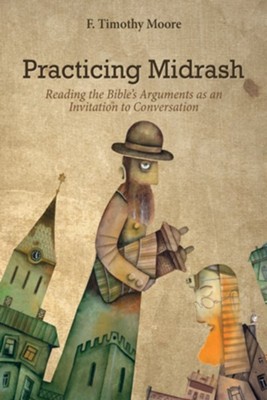
Practicing Midrash  -     By: F. Timothy Moore
Timothy Moore has written a very contemporary and helpful book called Practicing Midrash: Reading the Bible's Arguments as an Invitation to Conversation (2018).  The Gospels and the rest of the NT letters are filled with examples of Jewish Midrash that focuses on the spiritual meaning of the biblical text or the spirit of the Scriptures over the letter and law of Scripture. Jewish Rabbi's love to hear competing stories and place them side by side to hear various echoes and truths coming out from God's Word. We see this with two creation stories put together early on in Scripture or three versions of the ten commandments (Duet.5:9-10; Ex.20:5-5; Ex.34:6-7). There are two versions of the Jacob and David stories and dueling prophets like Amos and Hosea, Isaiah versus Micah and on and on it goes.

Several years ago, I started reading books together on similar subjects to compare and contrast the differences. This has given me a deeper and larger vision of the issues rather than letting one book form one's outlook or one story or version. So I want to list some of the best books I have read together that has given me a grandeur vision of God and I am waiting patiently with fervor for reading books yet to be published on topics I have been interested in or am currently reading.

1.I read Brian Zahnd's beautiful masterpiece, "Sinners in the Hands of a Loving God" with Greg Boyd's magisterial and popular version, Cross Vision dealing with God's wrath, anger, and violence in the Bible. A new book coming out in May which looks a very promising is Jason Byassee Surprised by Jesus Again: Reading the Bible in Communion with the Saints.

2.  For my spiritual and devotional life, I have been reading The Blue Book by Jim Branch which is filled with many beautiful thoughts and Christian writers with Nan Merrill's "Psalms for Praying: An Invitation to Wholeness. Merrill's book is like reading the Psalms by a contemporary Christian mystic. The translation is beautiful and cosmic.

3.  I have been frustrated for some time over reading Evangelical mistranslations of the Bible that keep people holding onto certain beliefs and doctrines that are neither biblical and unhelpful. So for the New Testament, I love David Bentley Hart's The New Testament: A Translation. This is the most accurate and literal translation of the NT I have read to date. I am also working through John Goldingay The First Testament: A New Translation which makes similar moves of letting the text speak for itself with all its ambiguities and roughness at times.

4.  Two complementary books to read together is Brian Zahnd's Water to Wine which shares his spiritual journey back to the liturgy and ancient Christianity and Bruno Barnhart The Good Wine: Reading John from the Center. Ancient and mystical come together powerfully in these two books.

5. The Best book I have read on Genesis is by the Eastern Orthodox scholar Peter Bouteneff Beginnings: Ancient Christian Readings of the Biblical Creation Narratives. Two new books I have that both look promising is Craig Allert Early Christian Readings of Genesis One and the edited work by Kyle Greenwood Since the Beginning: Interpreting Genesis 1 and 2 through the Ages.

6. I am currently reading and loving Peter Enns new book How the Bible Actually Works. I will have to wait to the end of this year to read Greg Boyd's new book Inspired Imperfection: How the Bible's Problems Enhance it's Divine Authority.

7.  I am also reading Richard Rohr's new book The Universal Christ. I am looking forward to reading two scholarly works coming out September this year, Ilaria Ramelli A Larger Hope? From Christian beginnings to Julian of Norwich and David Bentley Hart That All Shall Be Saved should be like a bomb going off on the Evangelical playground. I just found out Robin Perry's second volume to Ramelli's work came out before Ramelli's work. A Larger Hope, vol.2: Universal Salvation from the Reformation to the Nineteenth Century by Robin A. Perry.


Wednesday, March 6, 2019

The Universal Christ


Image result for the universal christ richard rohr


I have started reading The Universal Christ by Richard Rohr. Rohr wants to give a vision of Christ that is cosmic and huge. Here is what he says:

1.  What if Christ is a name for the transcendent within of every 'thing' in the universe? What if Christ is a name for the immense spaciousness of all true love? What if Christ refers to an infinite horizon that pulls us from within and pulls us forward too? What if Christ is another name for everything---in its fullness? (p.5)

2.  G. K. Chesterton quote----"Your religion is not the church you belong to, but the cosmos you live inside of" (p.6). Albert Einstein quote, "There are only two ways to live your life: One is as though nothing is a miracle. The other is as though everything is a miracle" (p.7)

3. Creation is the First Bible, and it existed for 13.7 billion years before the second Bible was written (p.12). The incarnation, then is not only "God becoming Jesus" but when God joined in unity with the physical universe and became the light inside of everything (p.13). Light is not so much what you directly see as that by which you see everything else (p.14)

4.  Our faith became a competitive theology with various parochial theories of salvation, instead of a universal cosmology inside of which all can live with inherent dignity (p.17). Jesus came to show us how to become human more than how to be spiritual (p.23).

All of this is just the first chapter!


Wednesday, January 2, 2019

Top Ten Favorite Christian Writers & Scholars (2019)


Image result for top favorite christian writers


Favorite Christian Authors:

1. Henri Nouwen (Catholic)

2. Brian Zahnd (Charismatic)

3. Peter Hiett (Protestant)

4. Richard Rohr (Catholic)

5. Michael L. Brown (Pentecostal)

6. Morgan Guyton (Progressive)

7. Robin Meyers (Progressive)

8. Keith Giles (Protestant)

9.  Shane Claiborne (Anabaptist)

10.  Brad Jersak (Eastern Orthodox)
*Archimandrite Zacharias (EO)


Favorite Christian Scholars:

1.  N. T. Wright (Anglican)

2.  David Bentley Hart (Eastern Orthodox)

3.  Richard Hays (Protestant)

4. Greg Boyd

5. Kenneth Bailey

6. Peter Liethart

7. Richard Middlton (Wesleyan)

8. Rodney Reeves (Baptist)

9.  Phil Krill (Catholic)

10.  Steven R. Harmon (Baptist)
*Meister Eckhart / Jason Byasee


Favorite Women Christian Writers/Scholars

1.  Madame (Jeannie) Guyon (Catholic Mystic)

2.  Illaria Ramelli (Patristic Scholar)

3.  Daniel Shroyer (Protestant Pastor)

4. Evelyn Underhill (Mystic scholar)

5.  Catherine Doherty (Russian Orthodox)

6.  Chiara Lubich (Catholic)

7.  Joa Bolendas (Protestant Mystic)

8.  Theresa of Avila/St. Theresieux

9.  Ilio Delio (Teilhard de Chardin Scholar)

10. Catherine Marshall (Protestant Minister's wife)


Tuesday, November 27, 2018

The Apokatatastasis: A Poem


Image may contain: text

Breathing Under Water: A Poem


Image result for breathing under water


I built my house by the sea.

Not on the sands, mind you;
not on the shifting sand.
And I built it of rock.

A strong house
by a strong sea.
And we got well acquainted, the sea and I.
Good neighbors.
Not that we spoke much.
We met in silences.
Respectful, keeping our distance,
but looking our thoughts across the fence of sand.
Always, the fence of sand our barrier,
always, the sand between.

And then one day,
-and I still don’t know how it happened -
the sea came.
Without warning.

Without welcome, even
Not sudden and swift, but a shifting across the sand like wine,
less like the flow of water than the flow of blood.
Slow, but coming.
Slow, but flowing like an open wound.
And I thought of flight and I thought of drowning and I thought of death.
And while I thought the sea crept higher, till it reached my door.
And I knew, then, there was neither flight, nor death, nor drowning.
That when the sea comes calling, you stop being neighbors,
Well acquainted, friendly-at-a-distance neighbors,
And you give your house for a coral castle,
And you learn to breathe underwater.

— Sr. Carol Bieleck, RSCJ

The Franciscan Vision


Image result for franciscan vision


St. Bonaventure of Bagnoregio (1217–1274) took Francis and Clare’s practical lifestyle to the level of theology, philosophy, and worldview. Unlike many theologians of his time, Bonaventure paid little attention to fire and brimstone, sin, merit, justification, or atonement. His vision is positive, mystic, cosmic, intimately relational, and largely concerned with cleaning the lens of our perception and our intention so we can see and enjoy fully!
He starts very simply: “Unless we are able to view things in terms of how they originate, how they are to return to their end, and how God shines forth in them, we will not be able to understand.” [1] For Bonaventure, the perfection of God and God’s creation is a full circle, and to be perfect the circle must and will complete itself. He knows that Alpha and Omega are finally the same, and the lynchpin holding it all in unity is the “Christ Mystery,” or the essential unity of matter and spirit, humanity and divinity. The Christ Mystery is thus the template for all creation, and even more precisely the crucified Christ, who reveals the necessary cycle of loss and renewal that keeps all things moving toward ever further life. Now we know that the death and birth of every star and every atom is this same pattern of loss and renewal, yet this pattern is invariably hidden or denied, and therefore must be revealed by God—which is “the cross.”
Bonaventure’s theology is never about trying to placate a distant or angry God, earn forgiveness, or find some abstract theory of justification. He sees humanity as already being included in—and delighting in—an all-pervasive plan. As Paul’s school says, “Before the world was made, God chose us, chose us in Christ” (Ephesians 1:4). The problem is solved from the beginning. Rather than seeing history as a “fall from grace,” Bonaventure reveals a slow but real emergence and evolution into ever-greater consciousness of Love. He was the Teilhard de Chardin (1881–1955) of the 13th century.
One reason Bonaventure was so hopeful and positive is that he was profoundly Trinitarian. He saw love always and forever flowing between Father, Son, and Spirit and on to us. Bonaventure’s strong foundation in the Trinity gave him a nondual mind to deal with the ineffable mystery of God and creation. A dualistic mind closes down at any notion of Trinity or infinite love, because it cannot process it.
For Bonaventure, God, is not an offended monarch on a throne throwing down thunderbolts, but a “fountain fullness” that flows, overflows, and fills all things in one positive direction. Reality is thus in process and participatory; it is love itself, and not a mere Platonic world, an abstract idea, or a static impersonal principle. God as Trinitarian Flow is the blueprint and pattern for all relationships and thus all of creation, which we now know from contemporary science is exactly the case.
— Adapted from Richard Rohr, Eager to Love: The Alternative Way of Francis of Assisi (Franciscan Media: 2014), 162-165.
[1] Bonaventure, Collationes in Hexaëmeron (Lectures on the Six Days of Creation), 3.2. See Ilia Delio, Simply Bonaventure: An Introduction to His Life, Thought, and Writing, 2nd edition (New City Press: 2013), 171.
(Source: Richard Rohr's Daily Meditation)


Panentheism Anyone?

“Two practical conclusions follow from panentheism. A panentheistic consciousness demands ‘more of our powers of awareness’—we see ‘God in a grain of sand; and in a towering mountain; and in a crippled old man; and in an act of love; and in a tragic happening.’ To be panentheistic is to believe ‘in a living God, a God living everywhere.’
The second consequence of moving into panentheistic awareness is ‘the democracy of it all. A God who is everywhere is everybody’s. A truly democratic God. Available to the least as well as the greatest.’ The God of panentheism is not a ‘God of power-control; a sort of commander-in-chief of the universe’s ecstasies….No, a panentheistic God has shared the fun, the ecstasy, the joy, and the pains…with the littlest among us. That is spiritual democracy.’ Following that path will move us from an ‘I’ consciousness to a ‘We’ consciousness. It will render us vulnerable and may make us enemies of powers and principalities. A panentheistic God is an incarnational one in whom we recognize that ‘the world, and all of its pieces, is ultimately a manifestation of God.’…
…A panentheistic theology is an ecological theology in the deepest sense of that word. Why? Because panentheism restates the sacredness of all things, the Divine in-ness in all things, the presence of God in all things, creation (basileia) as ‘kingdom or reign of God.’ Recovering the sacredness of all beings from forests to oceans, rivers to polar bears, eagles to tigers, is to recover a lost relationship with the holiness of being. In this way, we are in a position to re-imagine our politics, economics, education and religions as agents for honoring the rights and dignity of all beings. Our home (‘eco’ in Greek) becomes livable again. Theism distances the Divine from the rest of nature. Panentheism reunites them. No wonder Carl Jung warned that one can lose one’s soul by worshiping a ‘God out there.’ Theism does that (and atheism is not far behind).”
— Matthew Fox in "How I found God in everyone and everywhere" by Andrew M. Davis(p. 149,154)


Tuesday, November 13, 2018

There Be Dragons!

Image result for mystic dragon


HERE THERE BE DRAGONS...
Mystics are the map-makers of the landscape of God's Mystery. Never popular when alive, nor acknowledged by the conclaves of the religious establishments, Mystics wander alone… toward the map-less boarders of Inner Reality.
It used to be when cartographers developed maps of the ancient world they would leave the edges of the known world as a mysterious place of vagueness and danger. “THERE BE DRAGONS HERE", was the phrase left at the edges these maps, the edges of the known world, warning ships brave enough to voyage beyond the boundaries of reality that there could be danger. Wayfarers would be crossing the POINT OF NO RETURN.
Whenever we venture out beyond the maps of conformity: whether they be religious maps, theological, social, educational, conventional, etc., we head full on into the unknown. This unknown, far from frightening off the mystic, is where we prefer to tread. Mystics find their comfort in the ineffable Mystery of Reality, because their goal is not to try and conform this Mystery to conventional parameters, but to let it be Free and untamed.
Mystics don't run from dragons; they learn to ride them.
Out beyond the boundaries of orthodoxy and religion, you find, on whatever religious or philosophical “map" you are using, a clear end to what is knowable by the words, rites and rituals of religions. It’s at the edge of these knowable boundaries, written on virtually every religious map, ”There be Mystics here".
Mystics are the outcasts of religion. They play with dragons, frolic in the Mystery of God and come and go in and out of sight from the safe shores of orthodoxy. No one plays with Mystics. They are used as live bait for casting into deep oceans of being. Religionists wait to see if they return from the lands of dragons and mist covered mountains.
Some Mystics return with amazing stories of other worlds and indescribable sights. Their language changes to match the ineffable they have seen. Their appearance altars: a far off look in their eyes, their hearts on fire with the oblation of distant worlds and the songs of the Tathagata. Other Mystics never return, having befallen the lure of the boundless ecstasy of Divine Bliss.
The thing is, either way, religion needs the Mystic. Mystics are the offerings churches throw to the dragons to appease their gods of orthodoxy, not knowing that these offerings actually merit the entrance into Mystery. Truth needs the unorthodox journeys of those who climb to dragons lairs, map the cloud covered landscape of God's hidden Face and brave the journey across the Tintagel sea.
Mystics change the maps of the religious world. They rewrite the boundaries of Mystery to tell us: “Here there be Boundlessness", “Here there be Vast and Infinite Love”, “Here there be Radiant Emptiness", “Here there be Endless Bliss", “Here there be the Face of God".
And whatever words can be grasped of their ineffable mutterings, the esoteric maps of reality begin to be rewritten by the fire of living, breathing dragons.
For 56 years I have looked for my place among the religious landscape and finally know where I was meant to play:
Out here…
At the edge of the known…
Within the Mystery...
Where the boundaries of knowledge end and scriptures grow silent..
Out here…
Where there be dragons….

By~rOn Wright


Wednesday, November 7, 2018

Matthew: Jesus is the Embodiment of Torah

Image result for jesus embodiment of torah


The Greek word translated "genealogy" at the beginning of Matthew's gospel is the same word for "genesis" translated from the LXX in Genesis 2:4. Matthew uses apocalyptic imagery to reveal Jesus is the new genesis of creation as well as the fulfillment of OT promises and prophecies.

Jesus is greater than Jonah and Solomon (12:41-42) and even greater than the temple itself (12:6). The Torah says the Shekinah glory of God is present among two who study the Torah (Mishnah, Avot 3.2, 6). Jesus very presence embodies the Torah when he says, "Where two or three are gathered in my name, I am there among them" (18:20).

Matthew's last supper scene has intertextual connections to Ex.24 of the covenant banquet and the messianic promise of deliverance found in Zechariah 9. When the crowd later cries out to Pilate "His blood be on us and our children" and Pilate washes his hands of "this man's blood" in Matthew 27, these are not statements of condemnation of the Jewish people but following the promise of Zechariah, is to secure their liberation and salvation that goes all the way back to the beginning of Matthew's gospel, "He will save his people from their sins" (Matt.1:21).

Throughout Matthew's gospel Jesus is portrayed as the embodiment of both Israel and the Torah. The messiah is a sufferer like Israel and the Messiah is like the Torah where God's presence is with His people. The same language of "I am with you" in Matthew 28:20 is identical to Haggai 1:13. Jesus is Emmanuel, "God with us."


Monday, November 5, 2018

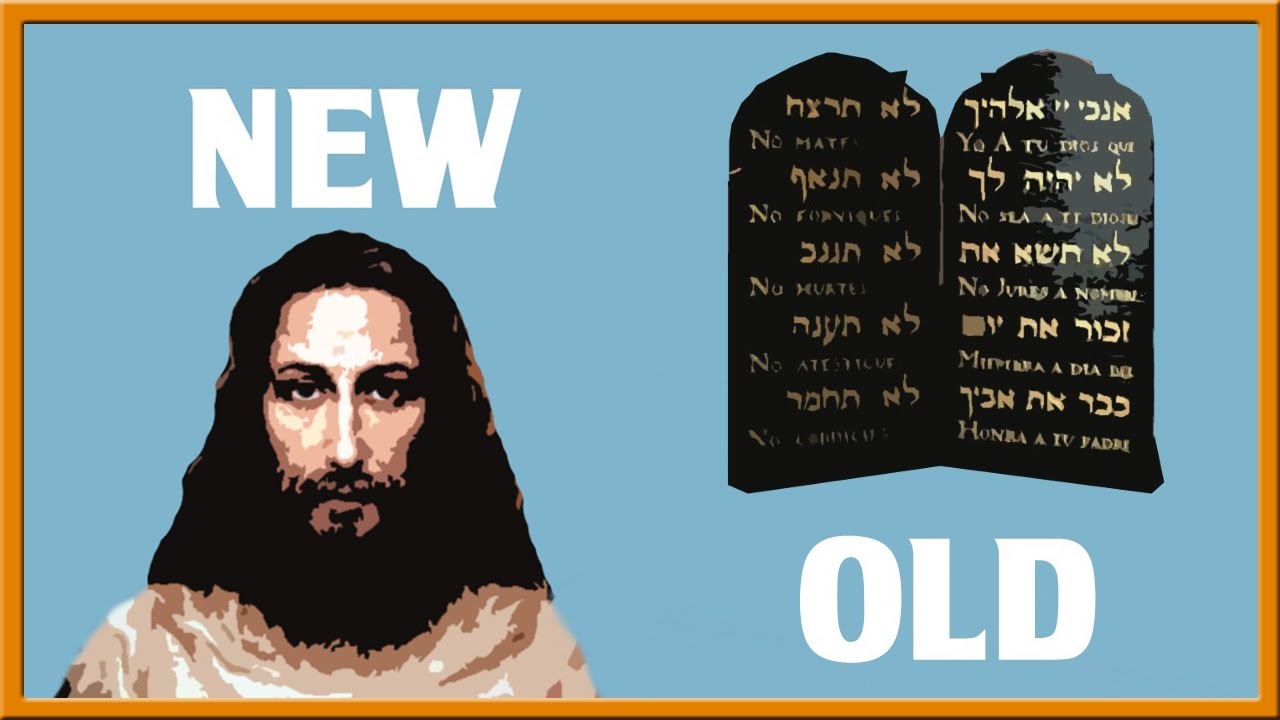
Is Jesus Moses 2.0?

Image result for jesus and moses 2.0


Why does the modern church mix and match and patch together the Old and New Testament Scriptures reading the Bible like a flat one-dimensional book?

Why do modern Christians post the ten commandments in classrooms and courthouses but not portions of the sermon on the mount?

Why do we parrot Billy Graham "the bible says" giving equal authority to every text within the written scriptures and usually not distinguishing between the written word and the living Word?

It is easy to promote violence form the Old Testament but not as easy to promote violence from the New Testament.

Is Jesus Moses 2.0 or is Jesus something greater?


(questions and ideas from Andy Stanley's new book, Irresistible)


Thursday, October 18, 2018

Mark: God's Wisdom and the Riddle of Christ


Image result for the puzzle of Christ


Jesus was God's wisdom incarnate and his teachings and actions were filled with riddles and irony. Jesus' riddles can awaken our stunted imaginations and draw us deeper into the character and life of his loving Father. Jesus disciples find him asleep on a boat, save us. They did not see Jesus' deeper meaning of him dying for humanity. Jonah is also found sleeping on a ship and he saves them by throwing himself overboard to what he thought was his death but turned into a kind of resurrection.

Jesus says his followers will be baptized in the waters and rivers of the Spirit of God. Like the first creation where the waters rise up, so Jesus is living water to those who will drink from him. The Gospel of Mark is about multiple healings of blind people as God wants to lift all of vulnerable humanity out of the swamp of spiritual blindness. As Israel listened to Moses with radiance glory, at the transfiguration, God speaks to Jesus disciples to listen to him as Jesus radiated with the glory of God.

Mark's Gospel starts his gospel out with the baptism of Jesus where the verb "torn" is the only place used in the gospels as in Isaiah 64:1 were Isaiah cries for God to tear open the heavens and come down to Israel. Mark's gospel is God's answer to Isaiah's cry for God to come and rule over Israel again. There is also this purifying judgment in Mark where he speaks of Isaiah but also alludes to the messenger preparing the way for the Messiah in Malachi as God purifies his people.

Mark reads Israel's story figurally as God radical love for Israel and all people. Some of us are bad interpreters of riddles and we miss in Mark's apocalyptic vision in chapter 13 is not about cosmic annihilation but rather the restoration of Israel. This morphs into the restoration of all things in Luke, Paul, and John's apocalyptic vision which the reader often misses.

The climax of the Jesus story is his crucifixion and vindication. When Jesus tells the parable of the wicked tenants in chapter 12, there are echoes and riddles to disclose in this parable. When the wicked tenants say "come, let us kill him" (Mk.12:7) this echoes back to the sacrifice of Isaac, the murder of a vineyard's son where death is not the final word. Or how about the story of Joseph plotting to kill their brother who used the exact same language of murdering him (Gen.37:20). Again, this figurative resurrection of Joseph foreshadows Jesus' fate.


Wednesday, October 17, 2018

What the Hell?


Image result for what the hell?


The word "hell" actually does not show up in the original Greek Septuagint Bible. It is an English translation from the Greek words, Hades, Tartaroo, and Genhena. If you want to see how bad our English translations are with the word 'Hell,' check out how many times it is used in different translations and then you will start to see the problem.

The message - 56 times

King James - 54 times

New King James - 32 times

New Living Translation  -  19 times

New International - 14 times

New American Standard - 13 times


Any Questions?


The Rich Man, Lazarus, and Jonah Stories


Image result for the rich man, lazarus, and jonah stories


"The chasm between "heaven" and "hell" in this story does not seem infinite. The rich man, though dead, is not beyond the reach of love. All he needs is for someone naked and alone to seek him out in hell---a loving emissary of the naked God, come to liberate him from his own internal prison."
- Doug Frank  (A Gentler God, p.302)

"Jesus once treated a crowd that had gathered around him to these cryptic words: "This generation is an evil generation; it asks for a sign, but no sign will be given except the sign of Jonah. For just as Jonah became a sign to the people of Ninevah, so the human son will be to this generation (Luke 11:29-30).

How does Jonah point to Jesus? Perhaps by spending three days in Sheol and then returning----a human son who goes to hell and back. When Jonah finally meets the Ninevites and warns them about God's judgment, he speaks with the conviction of one who has experienced that judgment----not as condemnation, but as salvation. He knows that hell's eternity is not literally eternal, and those who find themselves alone in their sufferings there are not literally alone.

It will be a cold day in hell before evangelical preachers use the story of Jonah to explain that "eternal" flames are not without end and that Jesus is present in hell. But large sectors of the Christian church have kept alive the strange idea that Jesus went to hell to put and end to its tortures."
- Doug Frank, pp.309-310).


Monday, October 15, 2018

Jewish Midrash as an Invitation to Conversation


Image result for jewish christian midrash

The church has not taught the faithful how to read comparative stories in order to form their faith. Have you noticed there are two creation stories noting their similarities and differences? Even the names of God in the original text are different. What about three versions of the ten commandments (Duet.5; Ex.20; & Ex.34)? Some of these promises from God are unconditional and some are conditional.

How do you hold onto that the Lord is a "God merciful and gracious, slow to anger, and abounding in steadfast love and faithfulness, keeping steadfast love for the thousandth generation, forgiving iniquity and transgression of sin" (Ex.34:6-7), and also ascribe the idea that "if you seek (God), he will be found by you; but if you forsake him, he will abandon you forever" (1 Chron.28:9).

God's Word invites us into a conversation with competing ideas and stories. Some Christians will focus on one story and others on an another but what do these stories tell us about God? What circumstances may be behind the words to divergent audiences? Do we silence the dialogue by picking and choosing who we want to listen to? How does the conversation change or progress in the light of God's final revelation---Jesus?